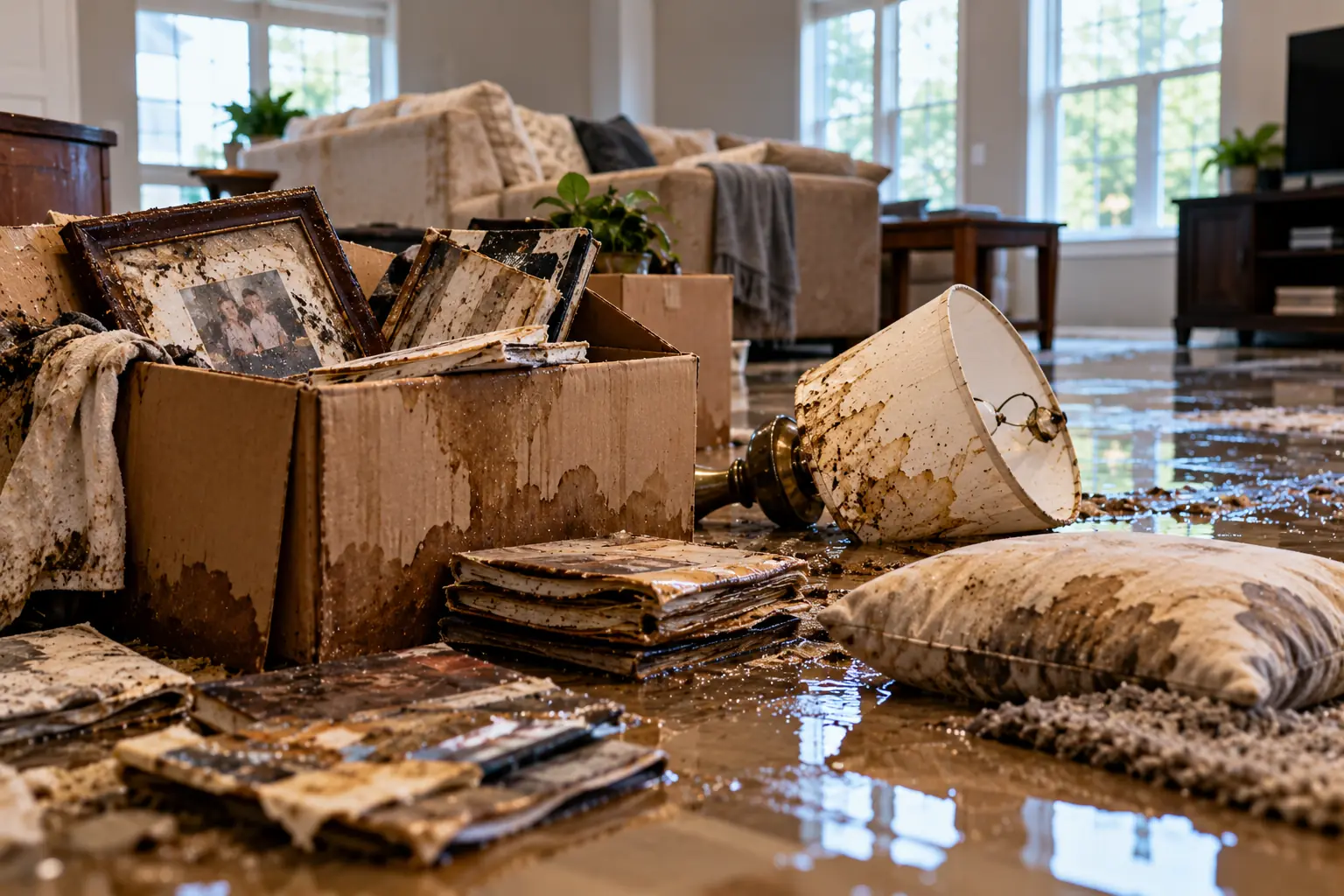
The questions that sort things
Two questions do most of the work: what kind of water reached the item, and can anyone clean and dry it thoroughly?
EPA's flood cleanup guidance puts the principle simply: you can usually clean and dry materials that do not soak up water, and you should throw away materials that soak up a lot of water and cannot come clean and dry. EPA adds that laundering can save some fabrics and textiles, and that a restoration professional who works on that kind of item may be able to clean and dry precious pieces. CDC's guidance for cleaning after a disaster is blunter for floodwater and sewage: throw away what you cannot clean or dry quickly.
The kind of water changes the answer
An item wet from a clean supply line is a different case from one soaked by a drain backup or by monsoon runoff through a doorway or garage. When the water was Category 2 or 3, absorbent items rarely come back to a safe condition, and the discard lists apply more firmly. Those category numbers follow the guide to water categories.
Arizona's dry air adds a trap of its own. A sofa cushion, a mattress or a stack of books can feel dry on the outside within a short time while the core stays wet, so the surface feel tells you little about what is happening inside.
Item by item
The right-hand column shows how professionals generally handle items of that kind. It is not a verdict on any one of your pieces.
| Item | Why water is a problem | How professionals generally handle it |
|---|---|---|
| Mattresses, pillows and foam | They soak up water deep inside, where no drying reaches. | CDC names mattresses, pillows and foam-rubber items among things to throw away after floodwater if you cannot clean or dry them quickly. After a small clean-water wetting, outcomes vary. |
| Upholstered furniture | Fabric, padding and the frame hold water, and the inside gives it up slowly. | Also on CDC's list of things to throw away after floodwater if you cannot clean or dry them quickly. After clean water, drying and cleaning sometimes work, depending on how soaked the piece got. |
| Solid wood and metal furniture | They take up little water, but wood can warp and glue joints can loosen. | Often cleaned and dried. Veneered and particleboard pieces behave like cabinet materials, the subject of the cabinets and trim guide. |
| Clothing, bedding and washable textiles | Fibers hold water and, if the water was dirty, whatever came with it. | EPA says laundering may save some fabrics and textiles. Items you cannot wash fall on the other side of the line. |
| Rugs and carpet pieces | They hold water in the fibers and the backing. | CDC names rugs and carpeting among items to throw away after floodwater if you cannot clean or dry them quickly. After clean water, a small rug may dry and clean up. See wet carpet. |
| Cardboard boxes and stored paper goods | They weaken when wet, give way under their own weight and wick water into whatever they hold. | Soaked boxes rarely survive, and what happens to the contents depends on what they are. |
| Stuffed toys, cosmetics and baby items | They absorb water and resist thorough cleaning. | CDC names these among items to throw away after floodwater. |
A room full of wet belongings, or unsure what kind of water reached them? Call for an assessment.
Call (480) 591-9654Papers, books and photos
Wet paper turns fragile, buckles and tears, and some of that loss is permanent. The U.S. National Archives published salvage guidance for families after flooding that remains a long-standing public reference, and CDC's general list includes books and paper products among items to throw away if you cannot clean or dry them quickly. What follows applies to items worth the effort of saving.
- Wet paper tears at a touch. Rough handling does more harm to soaked documents and books than the water itself, so leave them where they lie until you have advice.
- Glossy paper bonds to itself. Coated pages and prints stick together as they dry, which makes timing matter for magazines, albums and art books.
- Freezing suits paper, never old photos. The Archives describes freezing as a way to hold wet paper items until treatment, and says old photos and negatives should never go in a freezer.
- Some photos are very vulnerable. The guidance says several kinds are highly susceptible to water damage and that recovery rates can be low. For prints with no negative, it points to a conservator right away.
- Flood mud may carry contamination. Mud and dirt that flood water leaves on papers may hold whatever the water crossed, so keep bare hands off them.
The guidance dates from 1993, the Archives last reviewed it in 2016, and it addresses floods. Its handling principles fit a smaller leak too, but items of real value belong with a conservator.
Electronics and appliances
Ready.gov's flood guidance says not to touch electrical equipment that is wet or while you are standing in water. Treat your wet electronics as off-limits until someone qualified checks them. A dry outside shows nothing about the inside, and a device that powers on may still be unsafe.
- Do not plug in or switch on a wet phone, computer, television, power strip or appliance.
- Switch off the breaker from a dry spot instead of reaching for a plug near water.
- If a drive or phone holds data you need, a device recovery service can assess it before anyone tries to run it.
Valuable and sentimental items
EPA says a restoration professional who works on the specific type of item may be able to clean and dry precious items. The National Archives says to treat items of high monetary, historic or sentimental value only in consultation with a conservator, and examples include antiques, artwork, old photos, instruments and heirloom textiles. The American Institute for Conservation keeps a list of conservators who work with private owners.
For those items the cautious path is to limit further harm. Keep them out of direct sun and heat, hold off on any cleaning until you have advice, and remember that a slower, careful decision beats a quick, wrong one.
Keeping yourself safe while sorting
- Do not wade into standing water near outlets or cords to reach your things. Belongings can wait until the breaker is off and the floor is dry.
- Keep children and pets away from items that may have sat in dirty water, and wear gloves around them.
- Leave soaked sofas and mattresses where they sit. A wet mattress weighs far more than it looks, and dragging it spreads the water across more of your floor.
The first-steps guide sets the order for the room around your belongings. The building itself, from the pad under your rug to the slab, needs controlled drying of its own, and structural drying is that stage of the work.
Sources
Checked October 4, 2026.
- U.S. EPA, Flood Cleanup to Protect Indoor Air and Your Health (sorting materials; laundering; specialists for precious items).
- CDC, Guidelines for Cleaning Safely After a Disaster (items to throw away).
- U.S. National Archives and Records Administration, Emergency Salvage of Flood Damaged Family Papers (1993; reviewed 2016).
- FEMA, Floods, Ready.gov (wet electrical equipment).