Businesses, tenants and building owners
Commercial water damage restoration in Tempe, AZ
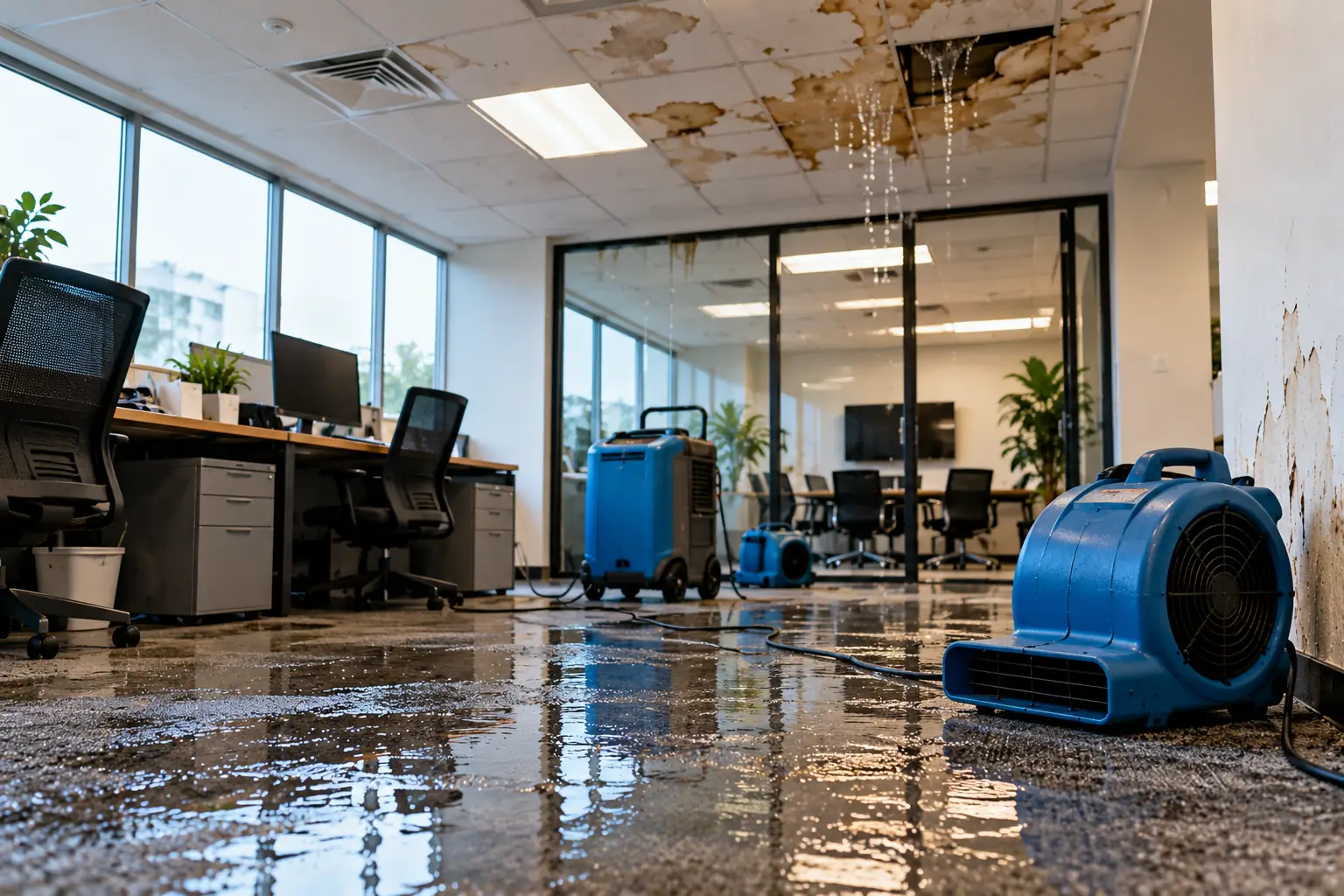
Water in your office, shop or restaurant reaches your staff, your stock and the suite below, not just your floor. Close the main water shutoff if you can reach it safely, then call: commercial water damage restoration that starts early keeps the loss to one space instead of a whole floor.
What is at stake
What water interrupts at your business property
Your home has one household to think about. Your business property has staff, customers, neighboring tenants and an owner, and the water reaches each of them differently.
Day-to-day operations
Wet floors and closed rooms stop your shop from serving customers and your office from using its desks. How much of your space stays open turns on where the water sits, how far it has spread and whether the area is safe to walk through.
Neighboring suites and shared space
Your walls, ceilings, slab and plumbing runs tie your space to the suites around it. Water from your suite shows up next door or below, and a leak that started next door can soak your space before you see it.
Access to the building
Keys, alarm codes, lockboxes and the authority to approve work often sit with different people: your owner, your property manager, your tenants. A locked mechanical room keeps the water running while someone tracks down the key.
What is inside
Stock, furniture, records and electronics in the wet area keep absorbing water. The longer they sit in it, the more of them move from drying to discarding.
By type of business
How the damage differs by type of business
The water behaves the same way everywhere. What it reaches, and what your business can do without, depends on the kind of space.
Offices
Carpet tile, suspended ceilings, cubicle walls and dense wiring. A stained ceiling tile can mean water sitting in the grid above it, and a wet floor can mean wet outlets and power strips under your desks.
Shops and retail
Your stock sits on floors and low shelves, and your displays stand in the water. Rain driven in at a storefront or a back door reaches the sales floor and the stockroom together, and your customer area has to stay safe to walk.
Restaurants and food service
Kitchens, dish areas and restrooms concentrate plumbing, floor drains and heavy appliances. A backed-up floor drain spreads contaminated water across your kitchen floor, and your service schedule depends on how much of the line it reaches.
Strip centers and multi-tenant commercial buildings
One roof, shared walls and several tenants mean a leak in your suite rarely stays in your suite. The owner or manager usually controls the roof, the main shutoffs and the common areas.
Storage, warehouse and light-industrial space
Concrete floors shed water, but pallets, packaging and cardboard on the floor soak it up. A large open floor can hold a shallow layer of water across a very wide area.
Residential buildings with several units
If you run an apartment or condo building, you answer to residents instead of customers and work through a different chain of approvals. Multi-unit property water damage follows the manager's and owner's side of those buildings.
How water travels
How water moves through a commercial building
Your building hides the path. Long open floors, drop ceilings, shared wall assemblies and vertical chases let water travel well away from the point where it entered.
Vertical migration. Plumbing, drain and condensate lines run through vertical chases that connect every floor. A leak on an upper floor follows the chase down, wets the walls around it on each level and surfaces as a ceiling stain two floors below.
Shared wall assemblies. Demising walls between suites share studs, insulation and a bottom track on one slab. Water that wicks into the base of your wall reaches the suite on the other side through the same cavity.
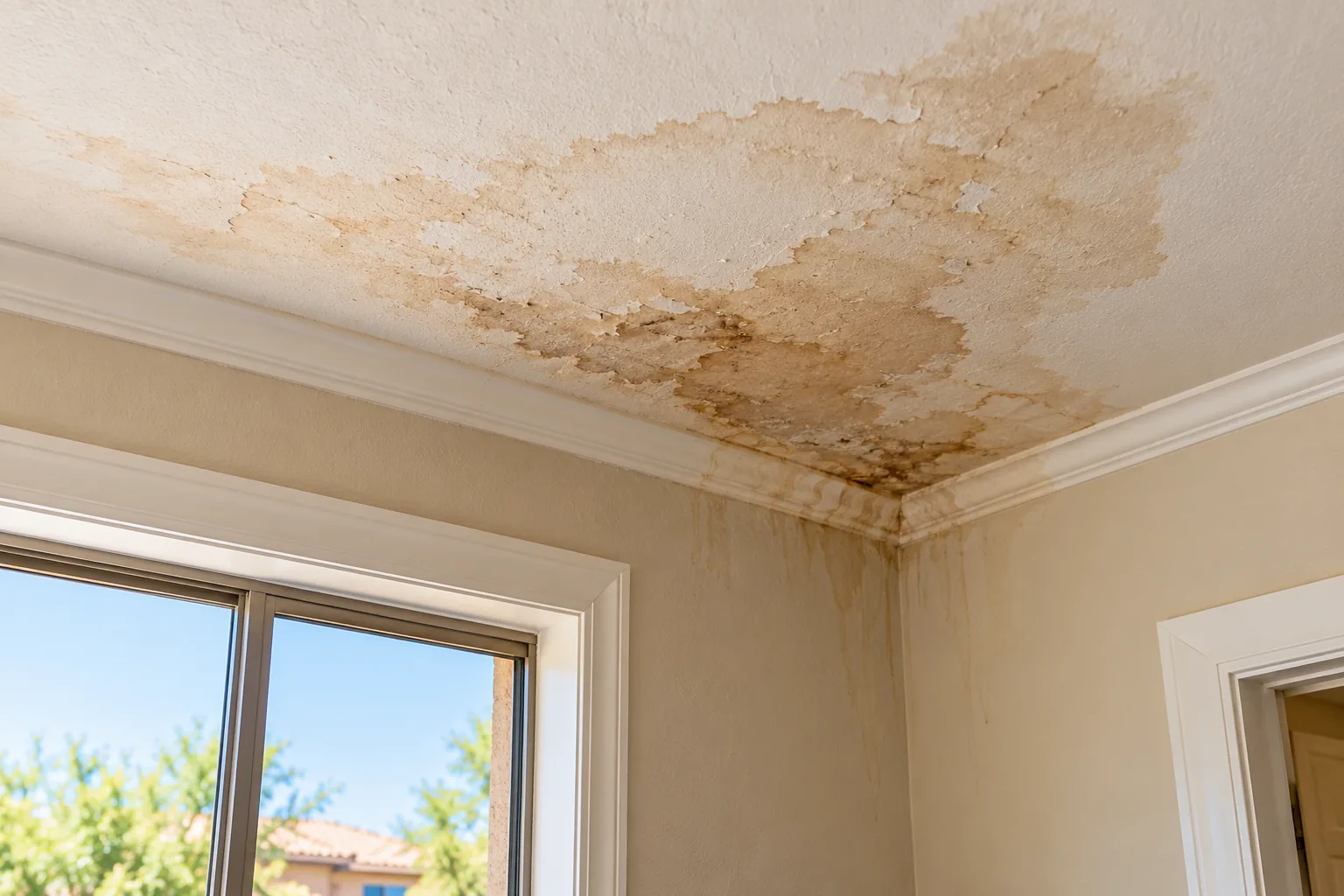
Ceiling grids and slabs. Water runs along a suspended ceiling grid and across a slab before it shows. Common starting points include rooftop A/C units and roof drains, restroom and break-room plumbing, rain at a storefront or loading door, and a failure in another suite.
What restoration involves
How restoration works around your operations
The stages match a home job. Your space differs in scale, in shared building systems and in the people working around the wet area.
Isolate the source
Water that keeps running defeats every later stage. In a sub-metered building, sub-meter isolation finds the supply that feeds the leak and closes that suite's line, so the rest of your tenants keep their water.
Remove the standing water
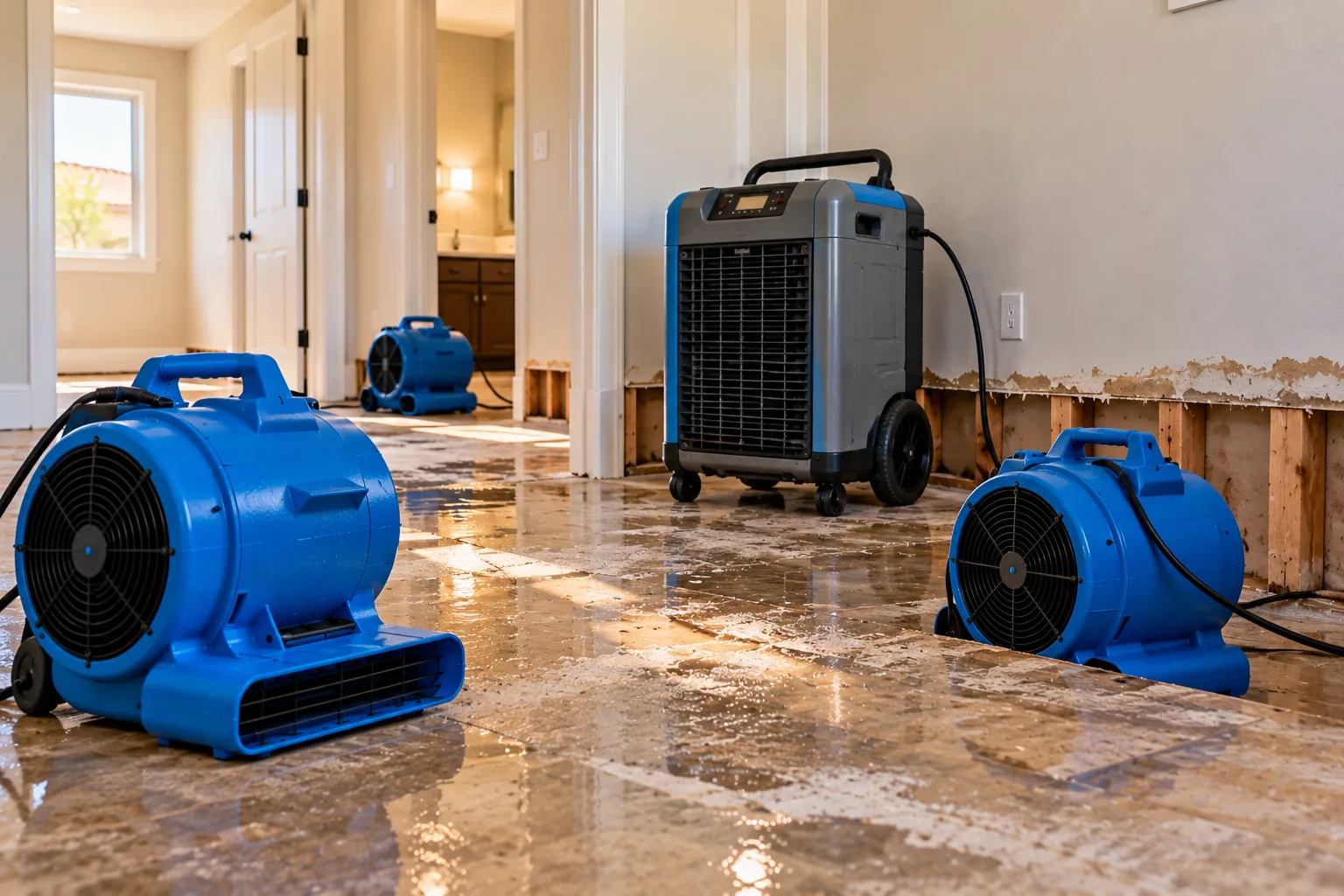
High-capacity extraction clears the bulk of the water from carpet tile, hard floors and slab across a large open floor. Water extraction on a commercial floor turns on volume and reach far more than in a house.
Contain and dry the structure
Containment barriers keep damp air out of the rooms and suites still in use. Moisture mapping traces wet drywall, slab and ceiling cavities, and high-capacity dehumidification runs as part of structural drying until each material meets its drying goal.
Clean and sort
Cleaning covers the surfaces the water touched, and soaked ceiling tile, carpet tile and insulation that cannot dry properly come out. Paint, new flooring and other finish work follow as a separate stage, often with a separate trade.
Your schedule depends on the extent of the damage and on the materials, and how long water damage takes to dry turns on the same factors in a commercial space.
Water in your business property?
Every hour it runs, it reaches another ceiling, wall or suite.
Limiting the spread
Keep the wet area from spreading through your building
Your first job is to keep the problem from growing: a stopped source, fewer people walking through the water and fewer spaces sharing its air.
Close the main water shutoff if you can reach it safely. If outlets, lighting or powered equipment sit near the water, switch off the power to that area at the breaker, and only from a dry spot.
Keep staff, tenants and customers out of the affected area. A wet floor is a slip hazard in any public space, and foot traffic carries water and dirt into dry rooms.
In a multi-tenant building, your main shutoff may sit in a locked mechanical room under the owner's or manager's control. Find out who holds that key first; the general order of first steps is in what to do after water damage.
Working around occupied space
Tenant access and approvals set the schedule
Restoring an occupied building turns on access and scheduling as much as on drying.
The person standing in the water is often not the person who can approve the work. Your tenant may hold the space while the owner or manager holds the keys, the lease terms and control of the building systems.
Tenant access protocols decide how fast drying reaches every wet space: who can open a suite after closing, how other tenants receive notice and who signs off on work in common areas. A suite that stays locked keeps its water while the suites around it dry.
Questions that shape the plan
- Which areas can stay open, and which close while the work runs?
- How will the work area keep entrances, exits and walkways clear?
- What happens to ceiling tile, flooring and wall finishes in the wet areas?
- Who is the contact for access, and how will updates reach the owner, the manager and the tenants?
- What does the scope include, and which finish work falls to another trade?
In Tempe
Roof equipment, summer storms and the building envelope
Rooftop air conditioning
Your building relies on rooftop units that run for long stretches in a Tempe summer. A blocked condensate line or a leaking unit wets the ceiling grid and the rooms below for days before anything shows.
Monsoon storms
Arizona's official monsoon season runs June 15 through September 30, according to the National Weather Service. Storms push rain through roofing, around storefront doors and under loading doors into a space that was dry the day before, and Arizona monsoon water damage follows how it gets in.
Water from outside
Runoff at an entry or a loading area carries dirt with it and calls for more caution than a clean-water leak. Flood damage restoration handles water that came in from outside.
Source: National Weather Service Phoenix, monsoon season dates.
What waiting does
What a slow start does to a commercial space
Water that sits overnight in an occupied building moves into more suites, more materials and more of your schedule.
- Ceiling grids: tile that stays wet sags and stains, and the water above it keeps spreading along the grid.
- Carpet tile and slab: water under carpet tile reaches the slab, which then takes far longer to dry.
- Shared walls: moisture in one demising wall reaches the next suite through the same cavity.
- Stock and records: paper, cardboard and packaging absorb water by the hour.
- Drain or outside water: contaminated water left in place widens the cleanup to every surface it touches.
Call while the water still sits in one area: professional extraction, containment and structural drying started now keep the loss to the suite where it began.
Questions
Questions from owners and managers
Who should call: the owner, the manager or the tenant?
Whoever is on site and can see the water. If an owner or property manager controls access or approves work, bring them in early: they may need to open the building or sign off on the work.
Can my business stay open during water damage restoration?
Sometimes, in part. It turns on where the water sits, how far it has spread, whether the area is safe and how the work fits around your operations. A closed stockroom differs from water across your whole sales floor, and nobody can name a reopening date until the extent of the damage is clear.
What if the water is coming from the suite above or next door?
Tell the owner or property manager and the neighboring tenant, since the source may sit outside your space and outside your control. The water that crossed into your suite still needs drying where it landed.
What about stock, equipment and electronics?
Keep electronics away from standing water, and leave them unplugged and off. Which items dry out and which go depends on what they are, how wet they got and the kind of water.
Does the whole building need drying?
Not necessarily. Drying follows the moisture, and moisture mapping shows which rooms, walls and slab areas hold water. That can mean one stockroom, one suite or several floors, depending on how far the water traveled.
What should staff and tenants hear?
Which areas to stay out of, who the point of contact is and what nobody knows yet. Short, plain updates work better than guesses about timing.
Business properties
Business properties in Tempe
Your business in Tempe faces the same water as a house, with more people, more shared systems and more approvals around it.
Water in your business? Call now.
Shared walls and ceilings carry it into the next suite while it sits.
Call about your property(480) 591-9654