The monsoon season is a window, not a limit
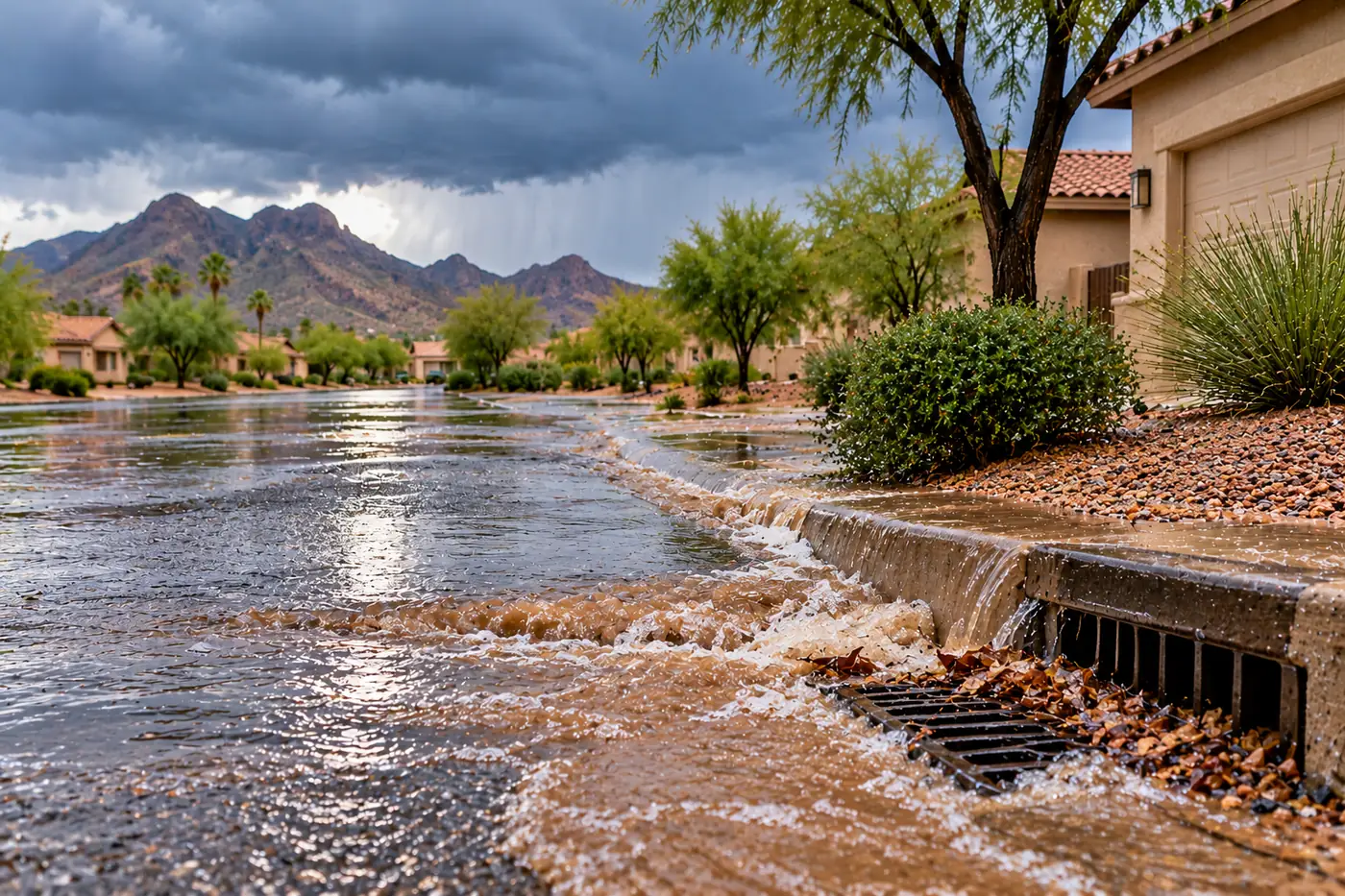
Arizona's official monsoon season runs June 15 through September 30, and most storm water reaches homes in that window. Outside water can still reach your property in any month.
Water from outside
Floodwater inside your home or building carries dirt, debris and possible contamination, so flood damage restoration cleans more and removes more than a pipe-leak job. Stay out of the water, switch off the power only from a dry spot, and call before the mud and moisture soak deeper into your walls.
What it means
Flood damage is water damage from water that arrived from outside: runoff pushing through your garage door or a low entry, storm water coming in under a door, or water rising against the building until it gets in. It differs from a burst pipe because the water crossed the street, the yard or the ground before it reached your house.
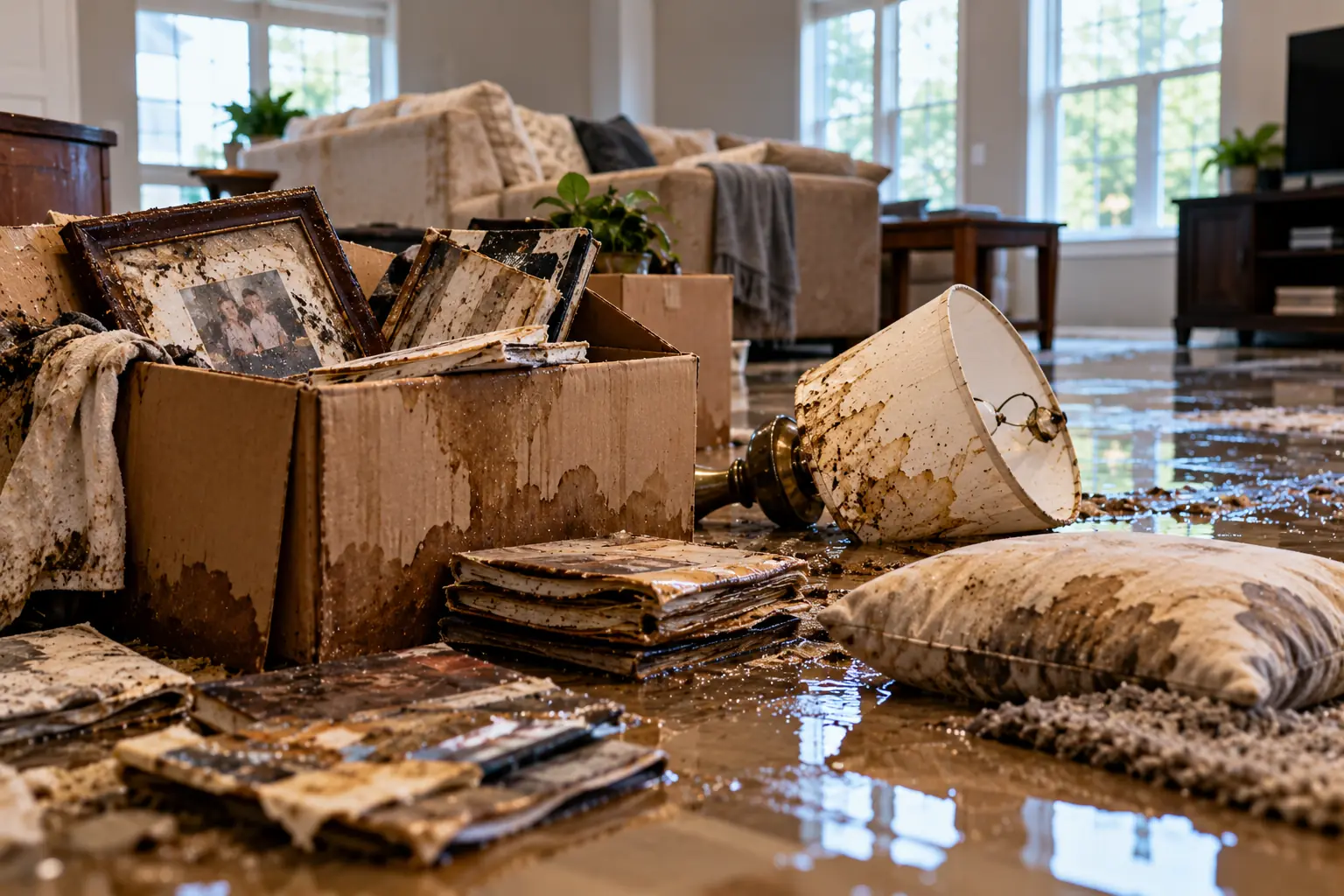
That changes the restoration. The CDC says floodwater can contain human and livestock waste, hazardous waste and physical debris, and it can carry displaced wildlife. Water like that does not simply dry out of your building: every surface it touched needs cleaning or removal first.
If a summer storm sent the water in, monsoon water damage follows how storm runoff gets into Arizona homes and when the season runs.
Source: CDC, Floodwater safety.
Safety first
Your safety comes before the cleanup. Floodwater is not tap water, and a flooded building hides hazards that are easy to miss.
Sources: Ready.gov (FEMA), Floods; CDC, Floodwater safety.
What changes
The same basic stages apply: remove the water, clean, dry the building and sort what you can keep. The source changes how much of each your property needs.
| Stage | After a pipe leak | After flooding |
|---|---|---|
| Water removal | Clean water pulled from your floors and carpet. | Water carrying dirt and debris, often leaving silt or mud on the floor once the water is gone. |
| Cleaning | Surface cleaning as part of the job. | A larger share of the work, because every surface the water touched needs cleaning before it dries. |
| What comes out | Saturated padding, some drywall and insulation. | More: anything that will not clean up and dry goes out, and the CDC lists wall coverings, cloth, rugs and drywall among those items. |
| Drying | Begins soon after the water is out. | Follows removal and cleaning, and EPA's flood guidance describes it as usually taking several days to weeks. |
| Cautions | Electrical and slip hazards. | The same, plus contamination, debris and the hazard of entering the water at all. |
Sources: CDC, Floodwater safety; U.S. EPA, Flood Cleanup to Protect Indoor Air and Your Health.
Mud and floodwater left in place soak deeper into your walls and floors.
The response
The order and scope change with the depth of the water and the kind of building, but most flood jobs on your property run through these stages.
The electrical hazard and the water level come first. Nothing else starts until your building is safe to walk into.
High-volume water extraction takes out the standing water. The silt, dirt and debris the water left behind come out next.
EPA's guidance is to throw away materials that soak up a lot of water and will not clean and dry, naming carpet, padding, drywall and insulation. Removing them early leaves your building less to dry.
Cleaning comes before drying on the hard surfaces and framing that stay, so the dirt does not dry into your structure.
Moisture mapping, controlled airflow and high-capacity dehumidification, as in structural drying, run until your materials meet the drying goal. Flooded buildings sit at the long end of water damage drying times.
Different situations
Outside water usually comes in here first. Your garage floor sheds water, but stored items, the drywall at the base of the walls and the door frames soak it up, and water often continues into the house under an interior door.
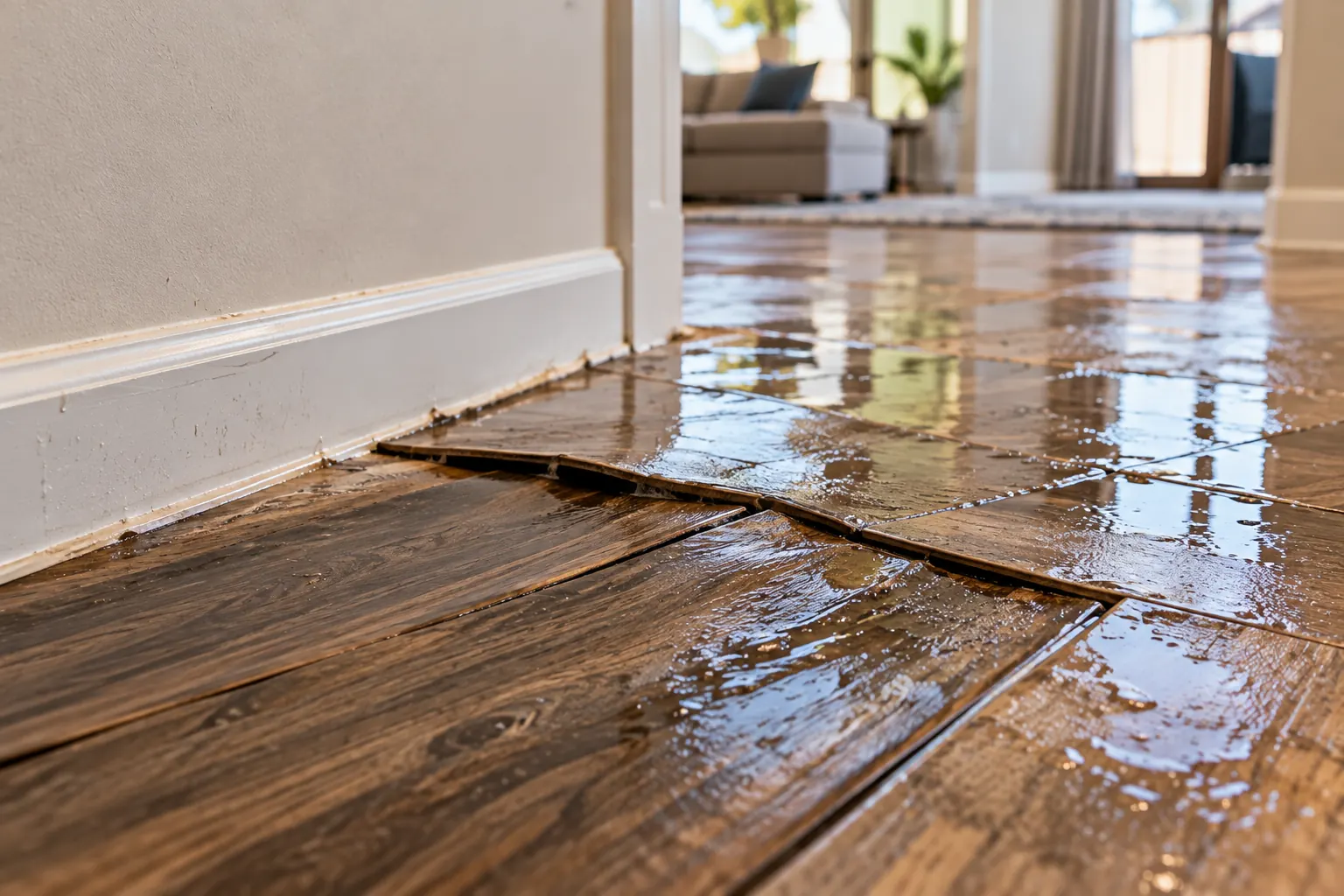
Carpet, padding and the bottom of your walls soak up water. Flooring swells or lifts and cabinets and baseboards absorb it, and how much you keep depends on how long they stayed wet and what was in the water.
Storm water through a roof is not flooding in the strict sense, but it reaches your rooms from above, often behind finished surfaces. Your ceilings and insulation take the same damage and get the same treatment.
Furniture, rugs, boxes and clothing that stood in floodwater are hard to save. EPA notes that laundering can save some fabrics and textiles, and the CDC advises throwing away items you cannot disinfect, including cloth, rugs and wall coverings.
A house and a shop face the same water, but your business also has stock, equipment and customers on the line. Commercial water damage restoration handles that side.
Ground-floor units take the water first, and the building may control the drains and the access. Apartment and condo water damage starts with who to tell.
In Tempe
Arizona's official monsoon season runs June 15 through September 30, and most storm water reaches homes in that window. Outside water can still reach your property in any month.
The National Weather Service documented flooding and severe storms in the Phoenix area from October 9 to 13, 2025, driven by the remnants of two tropical cyclones. Your property can take outside water well after the season ends.
Sources: National Weather Service Phoenix, monsoon season dates; National Weather Service Phoenix, October 9-13, 2025 event summary.
Questions
Contaminated water keeps soaking into your walls and floors.
Call (480) 591-9654Yes. Floodwater can carry contamination and debris, so restoration cleans more surfaces and removes more materials than after a clean-water leak. Keep people and pets out of it until then.
Often only a little. EPA lists carpet, padding, drywall and insulation among the soaked materials to discard when they will not clean and dry. Hard surfaces and framing are more likely to stay after cleaning.
Strictly, no: the water came from above rather than from the ground or street. It is storm damage that reaches the same materials, usually from your ceiling down, and the restoration runs the same way, with more caution where the water was dirty.
Not while standing water and anything electrical share the space. If officials told people to leave, wait until they say it is safe. FEMA says residents should not return home until authorities declare it safe.
Longer than most people expect: EPA's flood cleanup guidance describes drying as usually taking several days to weeks. Your drying time stretches with every layer of soaked material and every hidden wet cavity.
With your safety, then the call. What to do after water damage starts with the main shutoff and the breaker while the water is still there.
Keep reading
Mud and contaminated water keep soaking into everything they reached.
Call about the flooding(480) 591-9654