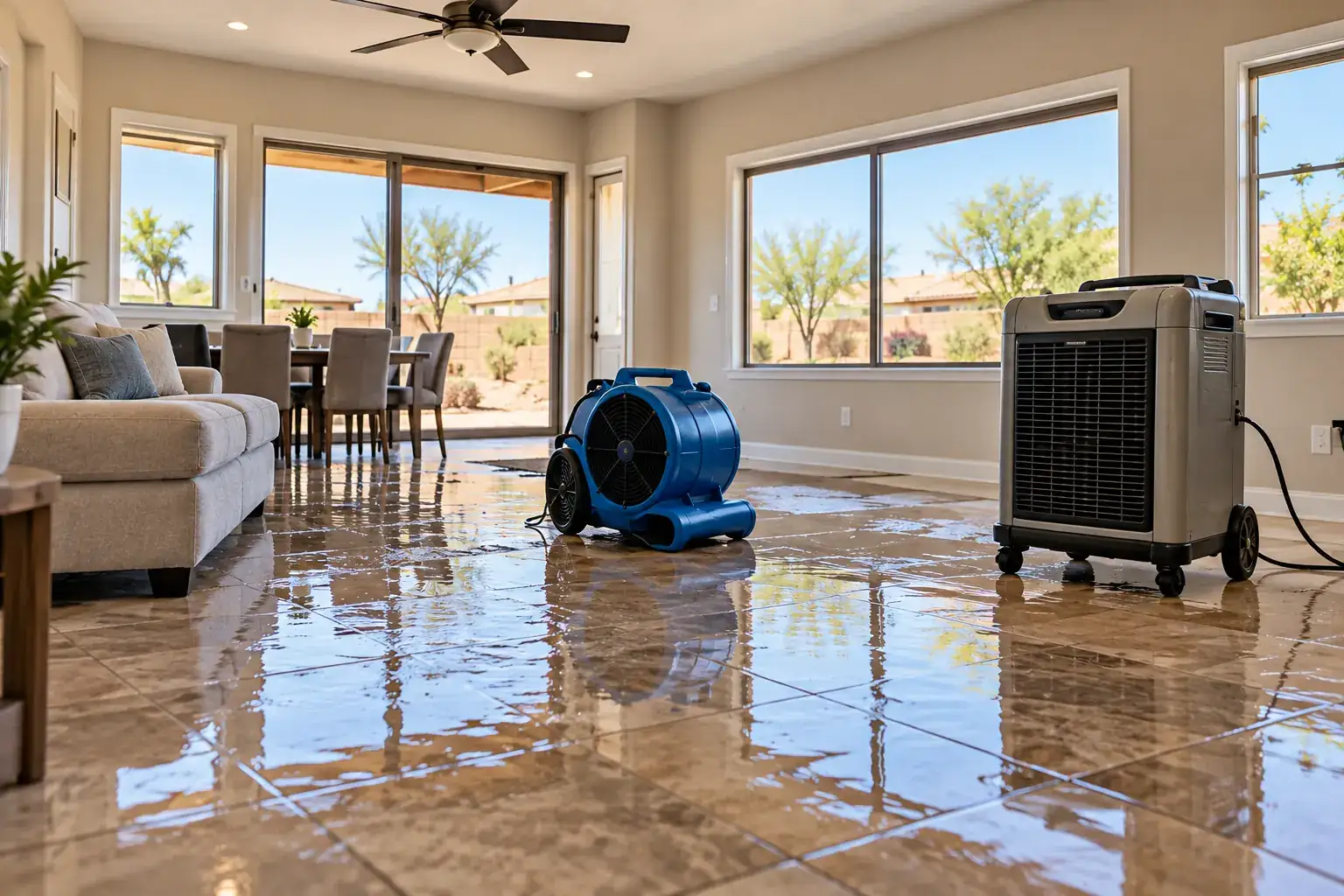
Drying time
How long does water damage take to dry?
Wet drywall, soaked padding and a damp subfloor dry on different clocks, so your drying time depends on the water, your materials and your building. Structural drying ends when your materials read dry, not on a set date, and calling early shortens it because less water has soaked in.
The short answer
Your drying time is a range, not a number
A firm number of days given before anyone sees your damage is a guess. What decides your drying time is how wet the materials are and how readily the moisture can leave them, not the calendar.
For scale, EPA's guidance on cleaning up after floods says drying a flooded building can take a long time, usually several days to weeks. That is the large end of the range; a small leak into one room is a smaller job, and it still ends when your materials read dry.
Source: U.S. EPA, Flood Cleanup to Protect Indoor Air and Your Health.
What decides the time
- How much water got in, and for how long
- Which of your materials are wet, and how many layers
- What kind of water it was
- How humid your building is indoors
- How much of the wet area the drying can reach
What changes it
The factors that lengthen or shorten drying
You can see or ask about most of these, which makes every timeline you hear worth examining.
| Factor | Why it matters |
|---|---|
| The material | Dense materials release water sooner than thick, porous ones. Your drywall, wood and padding hold water far longer than tile or sealed concrete. |
| How much water and how long | A material wet for hours has soaked up less than one wet for days, and a deep soak takes longer to leave than a shallow one. |
| Layers | Flooring over padding over a subfloor dries in stages, and each layer slows the one above it. A single bare layer dries sooner. |
| The kind of water | Contaminated water sends more materials out instead of drying them, which changes how much stays to dry. |
| Humidity inside | Air that already holds a lot of moisture takes less from your materials. Indoor dehumidification matters more than the outdoor weather, because the building usually stays closed. |
| Airflow and access | Moisture leaves the places air reaches. Water behind cabinets, under flooring and inside closed walls dries slowly until the space opens up. |
| Size of the area | More wet material means more moisture to pull out, and any drying setup removes only so much at a time. |
| Whether the source has stopped | Drying that starts while water is still arriving never finishes. |
| Hidden wet areas found later | A reading in a neighboring room, or a wall nobody checked at first, adds work and time. |
How progress shows
Readings, not days, measure your drying
Moisture readings track drying by comparing your wet materials with the same materials that stayed dry. The numbers come down, level out and match, and that marks the end of the job, sooner or later than anyone expected.
A surface that feels dry does not tell you the inside is dry. In the dry air Tempe often has, surfaces dry first and mislead most, and a wall can look finished while it still holds water that keeps the damage going.
Structural drying sets that drying goal and runs the moisture mapping that checks it.
Not sure how far the water reached?
Every day moisture sits in your walls adds days to the drying.
The whole timeline
Drying is one stretch of a longer job
When you ask how long water damage takes, you often mean the whole process, not only drying.
Before drying starts
The source has to stop and the standing water has to come out. Water extraction comes first, and a late start means more water has soaked in and more stays to dry.
Drying
The stage that varies most. It ends when your readings reach the drying goal.
Cleanup and sorting
Cleaning covers the surfaces, and materials that could not dry come out.
Repair, if needed
New drywall, paint, flooring or cabinets come afterward, often as a separate stage on their own schedule. Water mitigation vs restoration separates those stages.
What can help
What tends to shorten drying
- Stopping the source and removing standing water early
- Removing materials that cannot dry properly, such as saturated padding, so they leave the job
- Opening the places air cannot reach
- Keeping the affected area closed off from the rest of your building
- Finding every wet room at the start
What can slow it
What tends to lengthen it
- Water that sat for days before anyone noticed
- Several layers of flooring, or thick porous materials
- A source that keeps leaking
- Wet areas missed at the start and found later
- Materials wet with contaminated water that had to come out
Questions
Drying time questions
Wondering how long your drying will run?
Moisture left in your walls lengthens the job every day.
Call (480) 591-9654Will it dry on its own in Arizona's dry air?
Your surfaces can dry first, but moisture in walls, under floors and above ceilings dries much more slowly and keeps doing damage meanwhile. Looking dry is not the same as being dry, and readings show the difference.
Can I speed it up myself?
The part in your hands is the source: close the main water shutoff as soon as you can reach it safely. Air moving across a surface does not dry the inside of your walls or the space under your flooring, so calling early shortens the drying more than anything you can do at home.
Does a bigger leak always take longer?
Usually, but not always. A small leak that ran into a wall for a long time can take longer than a large spill caught early, because the water went deeper into more material.
How long before I can put flooring or paint back?
When your materials read dry, and not before. Closing up a wall or laying new flooring over a damp surface traps the moisture the drying set out to remove.
Why does the schedule sometimes change during the job?
New readings can show moisture where nothing looked wet at the start, and some materials turn out wetter than they looked. Your schedule follows the readings.
Is drying the same as water extraction?
No. Extraction removes standing water. Drying removes the moisture left in your materials, which is the slower of the two.
Keep reading
Related pages
Wondering how long it will take?
The sooner the water comes out, the less your materials soak up.
Call about the damage(480) 591-9654