Water damage help in Tempe, Arizona

Call (480) 591-9654

Mesa, Arizona

Water damage restoration in Mesa, AZ

Water is pooling on your floor, dripping through a ceiling or soaking a wall in your Mesa home, apartment or business. While it sits, it pushes deeper into the subfloor, the drywall and the framing, and more of the room has to come out. Shut off your main water, then call: water removal and water damage repair start with extraction and structural drying, and flood damage repair after a storm follows the same order.

Start with the source

Where water damage in a Mesa property comes from

The source decides what gets wet and how much of it you can save.

SourceWhat it soaks, and your first move
Supply line, water heater or appliance hoseYour flooring and wall bases around the fixture, and the ceiling below if it is upstairs. The water starts clean and spreads fast under pressure. First move: Close the fixture valve or your main shutoff, if you can reach it safely.
Floor drain, tub or toilet backing upWhatever sits low: floors, bottom plates, rugs, stored boxes. This water is contaminated. First move: Stay out of it and stop using every fixture that drains to it.
Air conditioner drain lineCeilings, closet floors and attic insulation, often in a spot that does not match where the unit sits. First move: Switch the air conditioner off at the thermostat.
Roof, skylight or window in a stormInsulation and drywall first, then a ceiling stain that can sit a long way from the opening. First move: Switch off the breaker for any light fixture near the stain, if your panel is dry.
Irrigation, pool or yard line near the houseWall bases, garage floors and the edge of the slab, usually out of sight until a stain or odor shows. First move: Close the irrigation valve or your main shutoff.
The unit above or besideCeilings and shared walls, then the flooring below. First move: Close your own shutoff if the leak is yours, and tell the building manager or association.

Mesa's water and sewer lines

Which side of the meter the leak is on

The City of Mesa publishes where its lines end and yours begin. That tells you who fixes the pipe, and the water already in your floors and walls is a separate job either way.

Water

The City says it repairs leaks at water meters and mains. Leaks on your side of the meter are yours: the pipe from the meter to the building, the irrigation system and the plumbing inside.

Your property's shutoff is the quickest way to stop a leak on that side. Your wet floors, drywall and insulation still need drying, whichever pipe the water came from.

Sewer

The City says it cleans and repairs the sewer mains in streets and alleys. The connection to the main and the service line from the main to your home are yours. For a suspected blockage, the City's wastewater page says to call a plumber first, and to call the City only if the plumber finds the problem in the main.

Sewage that comes up inside your building is contaminated water. Clearing the line is a plumber's job; getting the water out and taking out what it soaked is a separate one, and it starts with you staying out of the water.

Sources: City of Mesa, Report a Utility Emergency; Wastewater.

Water near gas and power

When the water reaches gas or power

The City of Mesa runs its own water, wastewater and natural gas utilities, and electric service in a limited part of the city that includes downtown. Your address decides which utility supplies your power.

That matters when water reaches your meter, your panel or a gas appliance. The City's utility emergency page lists separate lines for water, natural gas and electric emergencies, and sends gas emergencies to 9-1-1 as well. If you smell gas or see damaged electrical equipment, deal with that before the water.

The City's emergency page keeps the current numbers.

Standing water and electricity

Electrical equipment in or beside standing water can shock you. Keep out of the water, and switch off the breaker only if you can reach a dry panel without crossing it. Follow the safe first steps after water damage before anything else.

Irrigation water in Mesa comes from more than one provider. The City serves a small defined area and sends customers outside it to Salt River Project or Roosevelt Water Conservation District, so your address decides who hears about an overflowing irrigation line. The wall or floor it reached needs drying either way.

Sources: City of Mesa, Energy; Irrigation Service.
Water inside a Mesa building

Water under your flooring keeps lifting the boards off the subfloor. Call before it reaches the framing.

Call about the water(480) 591-9654

The work

Water removal, structural drying and repair, in order

Restoration follows the water. Your building goes through the same stages as most, and the amount of water and what it reached set how long each one takes.

Water removal and extraction

Water extraction pulls standing water out of your carpet, padding and floor before it soaks into the subfloor and the base of the walls.

Structural drying services

Moisture stays in your framing, subfloor and the back of the drywall long after the surface feels dry. Structural drying pulls it out with high-capacity dehumidification and moisture mapping that shows when your building reaches its drying goal, and the material and the amount of water set how long drying takes.

Sorting what can be saved

Materials that dry in place stay. Soaked padding, insulation and drywall that will not dry properly come out. Ask what is included, because mitigation and restoration are often separate jobs handled by different trades.

Flood damage repair after a storm

Storm water that comes in through your garage door or a low entry brings dirt with it, so more of the floor and wall base has to come out. That is flood damage restoration. During monsoon season, June 15 to September 30, your garage and low entries take the water first.

Room by room

Where water turns up in a Mesa home

Kitchen and laundry

Your dishwasher line, sink supply lines and washing machine hose sit under constant pressure. When one fails, water runs under the cabinets and into the flooring, and a puddle on top can mean much more underneath.

Bathrooms

A toilet supply line, a tub overflow or a shower leak soaks your floor and often the ceiling below. A soft spot near the tub or a stain below a bathroom means the subfloor is already wet.

Garage and entries

A water heater in your garage can fail where nobody sees it, and low entries take outside water first. Your wall bases and anything stored on the floor take the damage.

Ceilings and attics

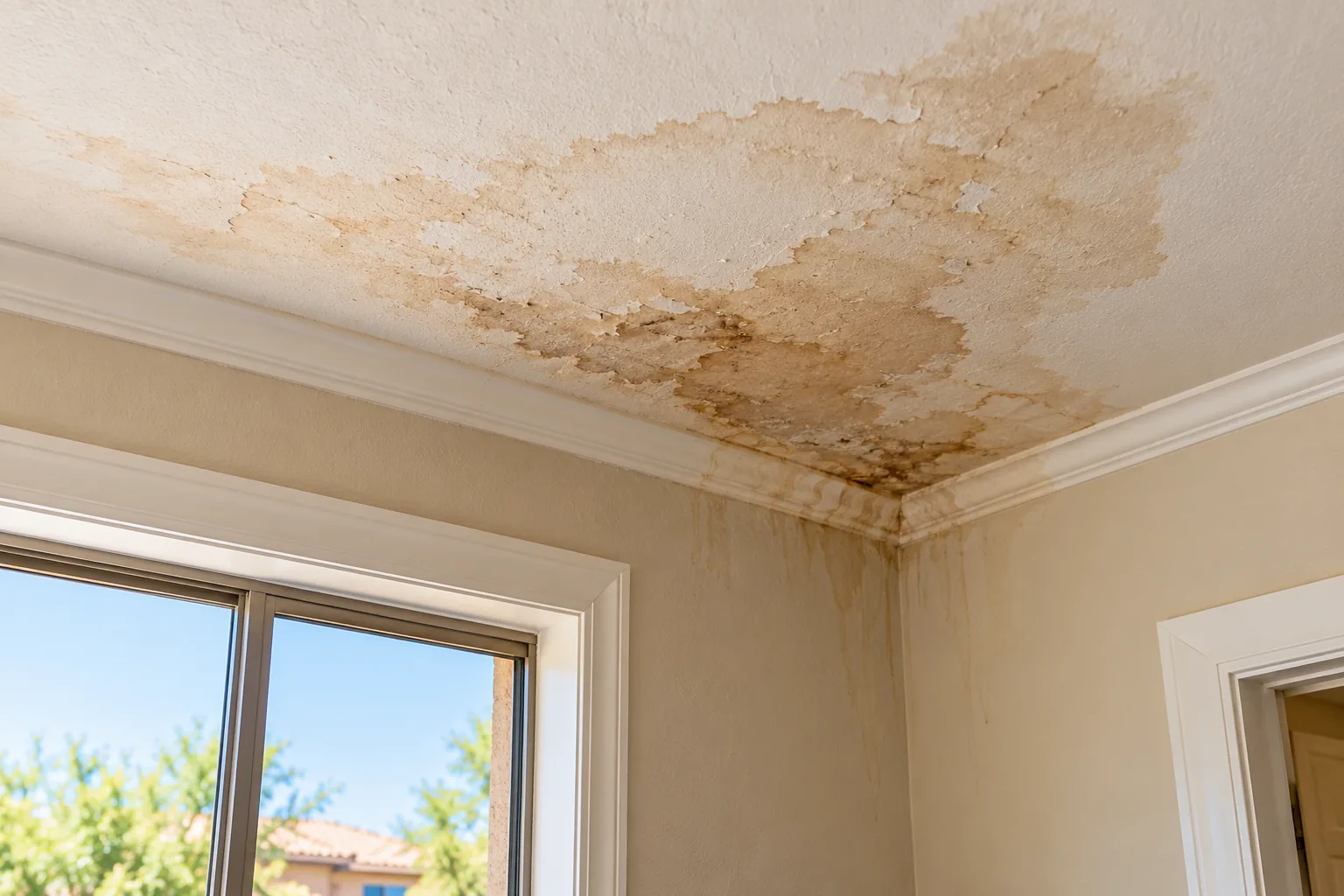
AC drain lines and roof leaks drop water through your insulation and drywall. Brown staining and a sagging ceiling mean the material above you is already wet.

Ceiling sagging or a floor going soft near the tub? Call now.

Call now (480) 591-9654

Property types

Houses, shared buildings and businesses

Houses

Water from an upstairs bathroom or an attic leak travels down through your wall cavities, so the damage shows in rooms far from the source. Every room that looks or smells off belongs to the wet area.

Apartments, condos and townhomes

Your plumbing and walls are shared, and the water often starts in another unit. Apartment and condo water damage often needs drying in two units at once, and multi-unit properties add a manager or association to every decision.

Rentals

If you rent, you may find the water while the owner decides on the work. The owner or manager also holds the keys, so tell them as soon as you find it.

Businesses

Your staff, visitors and neighboring tenants stay around a wet floor while you keep the doors open. Commercial water damage restoration plans the drying around your business hours.

Why calling now matters

What waiting does to a wet Mesa building

Water does its worst damage soon after it lands. The longer you wait, the more of the job moves from drying toward tear-out.

  • Padding and subfloor: padding holds water against the subfloor, and a wood subfloor swells and separates.
  • Drywall and insulation: drywall draws water upward from the floor, and wet insulation stays wet inside the wall.
  • Baseboards and cabinets: their bases swell where they meet the floor and rarely go back.
  • Sewage and storm water: both leave contamination in everything porous they touch.

Questions

Mesa water damage questions

Easier to talk it through?

Wet framing keeps swelling while you read. Call now.

Call (480) 591-9654
The City says the leak is on my side of the meter. What do I do?

That tells you the pipe is yours to fix, and a plumber is the usual call for it. The water inside your building is a separate job, so call about it while the pipe gets fixed.

Water is coming up through a floor drain or toilet. Is that the City's problem or mine?

It can be either: your service line or the City's main, and the City's wastewater page points to a plumber first. Either way, sewage inside your building is contaminated, so stay out of it and keep people and pets away.

Do I need to wait for the City or the utility before calling about the water?

No. The utility deals with its own lines, and the water already inside is yours to deal with. A gas smell or damaged electrical equipment is the exception: call the emergency lines on the City's page first.

Will Arizona's dry air dry the building out by itself?

Your surfaces can dry quickly while the framing, the subfloor and the back of the drywall stay wet. Moisture readings show whether your building is dry, and touch does not.

Is a small leak behind a wall worth a call?

Yes. A small leak is easiest to dry early, and the stain you can see is often only part of your wet area.

Does restoration include replacing drywall and flooring?

Not always. Water damage repair starts with drying and cleanup, and putting your finished surfaces back can be a separate trade. Ask about mitigation versus restoration before work starts.

Last updated:

Water inside a Mesa building? Call.

Water left in your floors and walls keeps spreading until extraction and drying stop it.

Call about the damage(480) 591-9654
Call for help(480) 591-9654