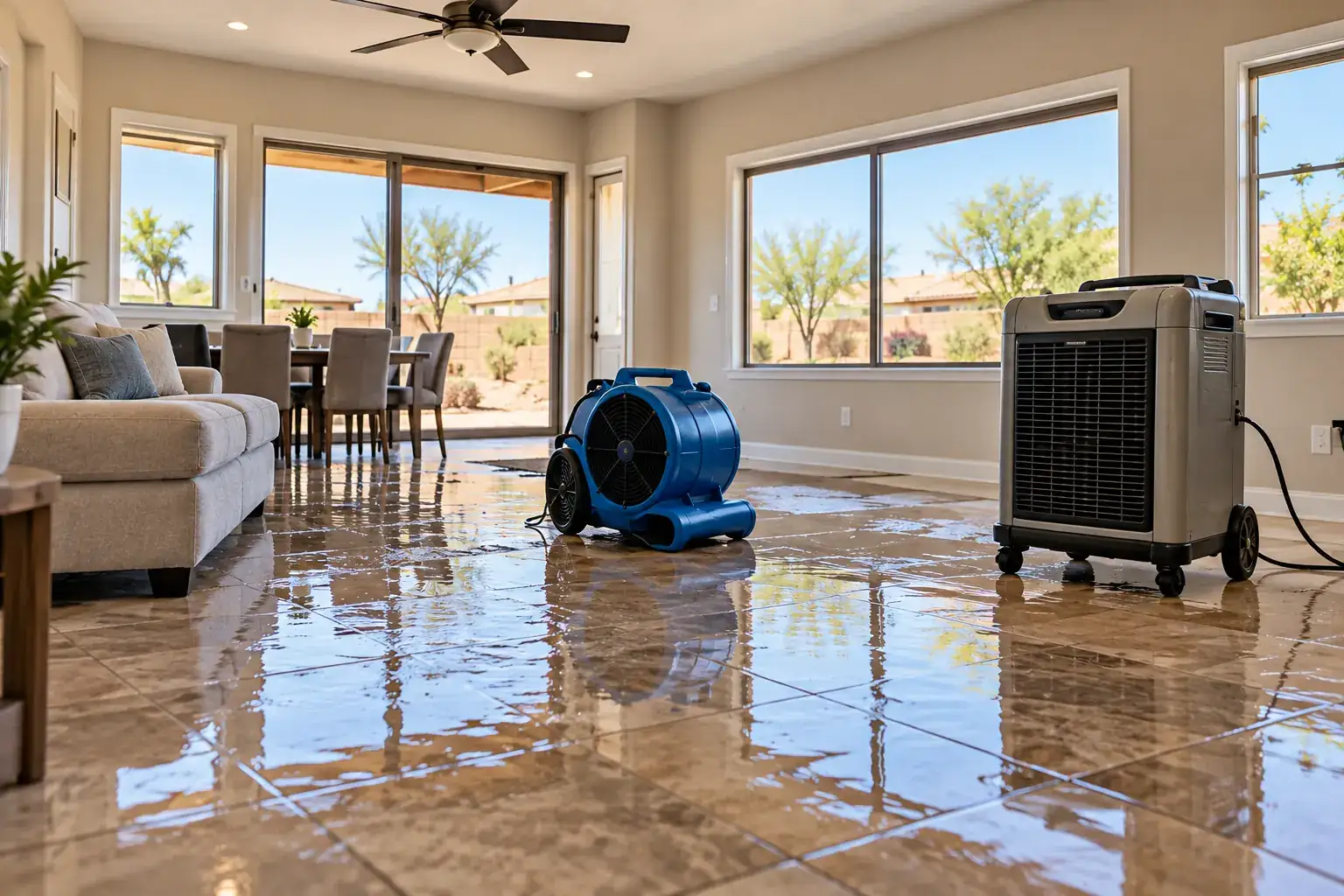
Drying the building
Structural drying in Tempe, AZ
Your walls, subfloor and framing still hold water after the standing water is gone, and that trapped moisture keeps swelling boards and softening drywall. Structural drying pulls it out of the structure, often without a strip out of your walls when drying starts early, so call before the moisture spreads into the framing.
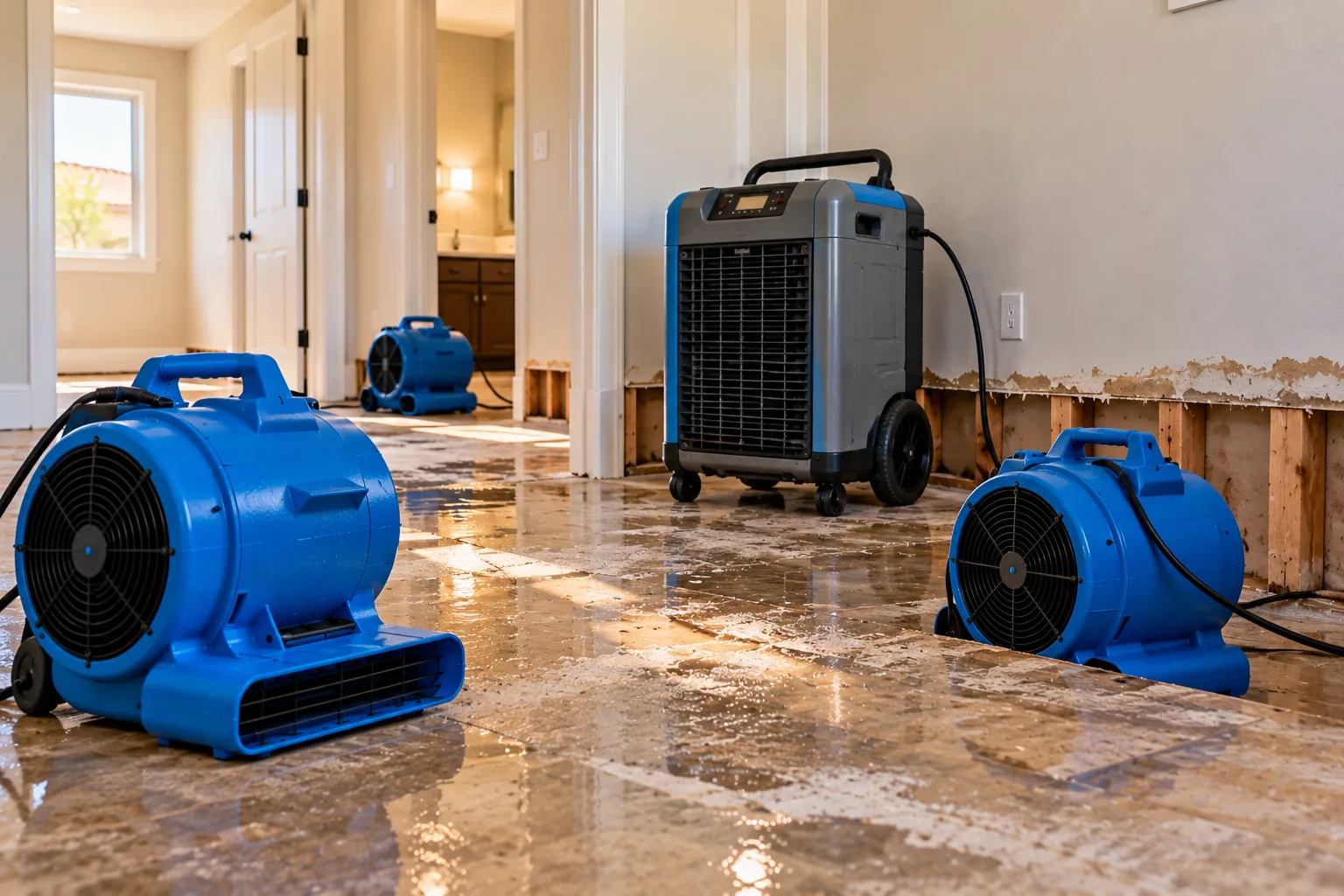
The method
What structural drying means
Structural drying is the stage of water damage restoration that dries your building itself: the framing, the subfloor, the drywall, the cabinets, the flooring and the air around them. "Structural" means the parts of the structure that water got into, not the building's strength.
It follows water extraction, which takes out standing water, and it reaches what extraction cannot. Water soaks into porous materials and travels along them, so a room that looks clear can hold a lot of moisture where you cannot see it.
The method moves moisture out of your materials and into the air, then takes it out of the air. Moisture mapping, controlled airflow and high-capacity dehumidification all serve that one goal.
Why moving air alone falls short
- Air moving across a surface does not remove moisture from the room.
- Moisture that evaporates into closed air settles back into your materials or condenses on cooler surfaces unless dehumidification takes it out.
- A dry-feeling surface does not show whether the inside of your wall is dry. Moisture mapping does.
Moisture in materials
How your building holds moisture
Different materials take up and release water differently, which is why the same leak can leave one of your rooms nearly dry and another still wet.
Porous materials absorb
Drywall, wood, carpet padding and insulation soak up water like a sponge. They hold a lot, and they release it slowly.
Dense materials resist
Tile, sealed concrete and glass take in little water at the surface. The damage sits at the joints, the edges and the layers underneath, where water collects.
Water travels along materials
Drywall draws water up from the floor, framing carries it, and a wall cavity moves it out of sight. The wettest spot in your home is not always the one nearest the leak.
Trapped water has no way out
Under flooring, behind baseboards and inside closed cavities, moisture cannot escape into the room. Drying gives it a path, and sometimes that means opening the space.
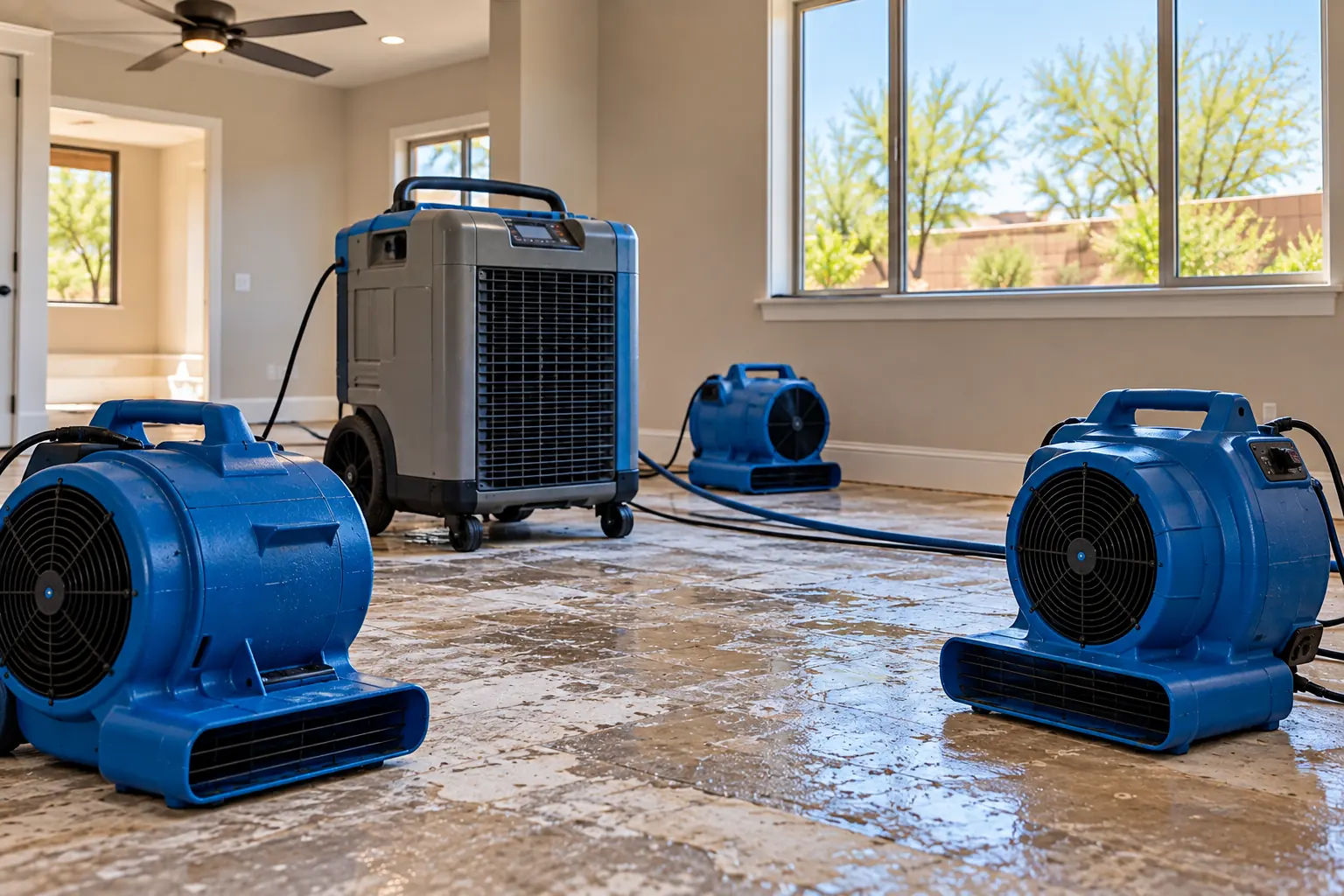
How it works
How structural drying works through your building
The details depend on your materials and the size of the area, but drying a building generally runs through these parts.
Map the moisture
Moisture mapping measures how wet your materials are and traces wet areas behind finished surfaces. Mapping covers the obviously wet rooms and the rooms next to them, because water crosses room lines.
Decide what dries in place and what comes out
Some materials dry where they are. Others, such as soaked padding or saturated insulation, come out because drying them properly is slow or uncertain, and water from outside or from a drain pushes that line toward removal.
Move air across the wet surfaces
Controlled airflow across your floors and walls lets moisture leave the material. Placement matters more than the number of units, so the airflow runs across the wet surfaces rather than around the room.
Pull the moisture out of the air
High-capacity dehumidification takes moisture out of the air so your materials keep releasing more. The room usually stays closed so the drying works on your building, not the outdoors.
Open the spaces air cannot reach
Where moisture sits trapped behind baseboards, under cabinet toe-kicks or inside a wall cavity, a small opening or a removed section lets air in. Whether your walls need a strip out depends on the material and how wet it is.
Measure until you reach the drying goal
Moisture readings repeat over the course of the job and compare your wet materials with the same materials in a dry part of the building. Drying ends when the wet materials read like the dry ones, not when they feel dry.
The drying setup
What the drying setup in your home does
When drying runs in your home, each part of the setup does one job.
| Capability | What it does for your home |
|---|---|
| Moisture mapping | Finds where water sits inside your floors, walls and ceilings, including the rooms next to the leak. |
| Controlled airflow | Moves air across wet floors, walls and ceilings so moisture leaves the material and enters the air. |
| High-capacity dehumidification | Takes the moisture out of the air so the air keeps drawing more out of your materials. |
| Containment | Plastic barriers keep drying air where it does the work and keep damp air out of your dry rooms. |
| Drying-goal checks | Repeated readings compare your wet materials with dry ones and show when the job has met its goal. |
What you will notice
Drying is loud, it takes up floor space, and the affected rooms usually stay closed. Ask before you move anything or change the thermostat, because the setup depends on both.
Walls that look dry after a leak?
Surfaces dry first while your framing and subfloor stay wet.
How you know
When your building is actually dry
Touch is a poor test. A wall can feel dry to your hand and still read wet inside, and your flooring can look normal while the subfloor beneath it stays wet. In dry air, surfaces dry first, which is exactly why they mislead.
Readings are the test. EPA's flood cleanup guidance points to moisture measurement to check whether materials such as walls, cabinets and flooring are dry. The readings compare your wet materials with the same materials in an unaffected part of the building, and the setup comes out when the numbers match.
Readings, not the calendar, mark the end of structural drying. How long drying takes depends on the material, the water and your building.
Source: U.S. EPA, Flood Cleanup to Protect Indoor Air and Your Health.
What drying cannot do
When your structure dries without a strip out, and when it needs one
Drying removes water; it does not reverse what the water already did. Cupped flooring may not lie flat again, crumbling drywall does not recover, and materials soaked by contaminated water usually come out instead of drying in place.
Arizona's dry air can hide the problem. Your surfaces dry first while moisture stays in cavities, under flooring and above ceilings, and a closed house cooled through a Tempe summer does not dry out a wet wall cavity on its own.
Replacing finished surfaces once the structure is dry, such as drywall, paint, flooring or cabinets, is a separate stage. Water mitigation vs restoration marks where drying ends and repair begins.
Where this fits
Structural drying comes after water extraction and before cleanup and any repair. It is one stage of water damage restoration in Tempe, which runs from the source to a dry, clean building.
Questions
Structural drying questions
Will the walls dry out on their own?
Not reliably. Moving air without dehumidification leaves the moisture in the room, and outdoor air can carry its own humidity, so neither shows whether the inside of your wall or the space under your floor has dried. Air at the surface is not structural drying.
Can wet drywall dry in place?
Sometimes. Drywall that is damp rather than soaked, took on clean water and has not stayed wet long can often dry in place. Saturated drywall, or drywall soaked by contaminated water, usually comes out.
Do the walls have to come open?
Not always. Removing a baseboard or making a small opening often lets air reach a cavity, and some jobs need neither. When moisture sits trapped and nothing else reaches it, a section of wall comes out.
Why is so much of the setup running?
A large wet area or several wet materials need air moving across all of them and moisture pulled out of the air. The size of the setup follows the size of the wet area, and it should shrink as your readings come down.
Do I have to leave while it is drying?
Not necessarily, but the drying is loud and the affected rooms usually stay closed. Whether your space stays livable depends on how far the damage reaches and the kind of water.
How do I know the drying has finished?
Your wet materials read the same as comparable dry ones, and the readings have stopped dropping. A surface that feels dry is not enough.
Keep reading
Related pages
A wet building needs structural drying.
Moisture in your framing and subfloor keeps spreading until it comes out.
Call about drying(480) 591-9654