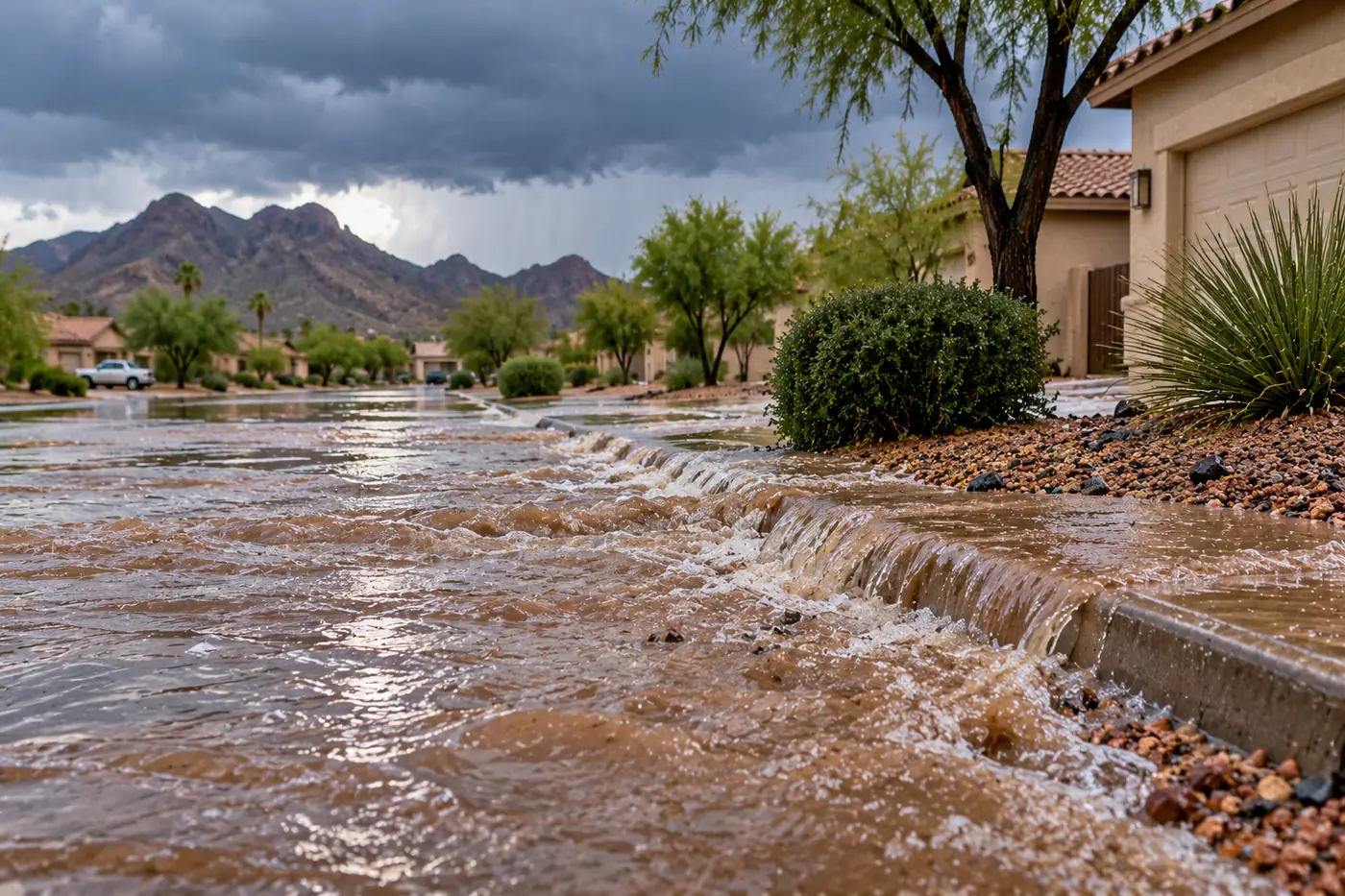
Chandler, Arizona
Water damage restoration in Chandler, AZ
Water is creeping under your garage door, staining a ceiling after a storm or spreading from a split line in your Chandler home or business. Every hour it stays, it soaks further into your flooring, your drywall and the base of the walls. Close your main shutoff if a pipe is the source, then call: water damage repair and flood damage restoration both start with getting the water out and drying the structure.
How it gets in
Four ways water reaches a Chandler building
The way in tells you how careful to be and how much of your floor has to come out.
Emergency flood cleanup after a storm
Rain that gathers at your low entry, garage threshold or patio door pushes inside. It arrives with dirt and can carry worse, so more of your flooring and wall base has to be cleaned or taken out.
Down through the roof and windows
Storm water finds flashing, skylights and window frames and soaks your insulation and drywall. You see it as a stain that may sit well away from the opening.
Out of plumbing and appliances
A burst line behind a sink, a failed water heater or a loose hose can flood your room in minutes. A slow drip inside a wall does its damage out of sight, sometimes for weeks.
Up through a drain
Water rising through your floor drain, tub or toilet is contaminated. Stay out of it, and keep children and pets away from it.
Chandler conditions
Where Chandler says flood water collects
The City of Chandler's floodplain page says several small areas of the city lie in what is commonly called the 100-year floodplain, generally next to canal banks and railroad track embankments, where water can pond during heavy rain.
Water that ponds beside an embankment or a canal bank runs to the low points nearby: your garage threshold, your patio door, a gap under your gate. If your property sits near one, the first sign after a storm may be water at the edge of your lot rather than a leak inside.
The City also describes how storm water moves, through storm drains, pipes, ditches and retention basins, and says the City does not treat it the way it treats sewage. Water that reaches your floor from the street or a ditch is dirty water, which is why flood damage restoration takes out more than a pipe leak does.
Sources: City of Chandler, Floodplain Management in Chandler; Stormwater Management and Resources.
Source for the meter line: City of Chandler, Water Services FAQs.
Water in a Chandler property
Storm water in your carpet pad keeps soaking the floor beneath it. Call while the subfloor can still be dried.
The work
Water damage repair and restoration, stage by stage
The order is usually the same. The amount of water, what it reached and how long it sat decide how long each stage takes in your building.
| Stage | What it does for your building | Read more |
|---|---|---|
| Stop the source, make it safe | Nothing dries while more water keeps arriving, and standing water near outlets can shock you. Close your shutoff and keep out of the water. | First steps after water damage |
| Take out standing water | Industrial extraction pulls standing water out before more of it sinks into your flooring and the base of the walls. | Water extraction |
| Dry the structure | Structural cavity drying pulls moisture out of framing, subfloors and drywall, and moisture readings confirm when your drying goal is met. | Structural drying and how long it takes |
| Clean, sort and set the scope | Your surfaces get cleaned, and materials that will not dry properly come out. Putting finished surfaces back can be a separate trade. | Mitigation versus restoration |
| Flood water from outside | Storm water and runoff add dirt and contamination, so more of your floor tends to come out than after a clean leak. | Flood damage restoration and the monsoon guide |
Hidden moisture
A dry-looking building can still be wet
Water spreads past the spot where you first see it. Your drywall draws it upward from the floor, your padding holds it, and it travels under the flooring, so the wet area is usually larger than the one you can see.
The dry Arizona air adds to the confusion. Your floor can feel dry while the subfloor under it is not, and only moisture readings settle it, which is why a small stain is still worth a call.
Property types
The property decides who needs to be involved
Single-family homes
You decide, and you close the shutoff. Your garage and low entries are the usual way in for outside water, and water from upstairs runs down through the wall cavities.
Townhomes and HOA communities
Shared walls and a shared roofline mean your source may be next door, and your association may control the main shutoff and the common areas. Tell the association as well as calling about the water in your home.
Apartments and condos
Your water usually starts in another unit or in the building's plumbing. As a resident you face the drying in your own unit, covered in apartment and condo water damage; a manager or board faces every unit at once, in multi-unit properties.
Businesses
Your staff, your customers and the rest of the building all have a stake, so settle early who can approve the work. Commercial water damage restoration keeps the drying around your trading hours.
Questions
Chandler water damage questions
Water pooled outside after a storm and some of it got in. Who do I tell?
Two separate things. You can report standing water or flooding outside to the City, which says its Environmental Management staff takes those reports. The water inside your building is a separate matter, and that is the call to make about it.
How do I find out whether my property is in a floodplain?
The City of Chandler's floodplain page points to the Maricopa County Flood Control District for that. The answer tells you about your property's location. It does not change what to do about water that is already inside.
There is standing water in the garage but nothing seems to be leaking. Is that still water damage?
If the water has reached your flooring, your wall bases or anything stored on the floor, yes. Water from outside carries dirt into everything it touches, so more of it tends to come out.
Water stained the ceiling after a rainstorm. Is that worth a call?
Yes. A ceiling stain usually means the insulation and drywall above it are already wet, and the opening where the water came in is often somewhere else. Keep clear of any light fixture near the stain.
How do I know the building is actually dry?
By readings, not by touch. Moisture readings show what a surface cannot, and your drying is checked again and again until they come down. Structural drying works to that goal.
Is one wet room worth a call?
Yes. Water in one of your rooms often reaches the next through the wall or under the flooring, and you save more of both by drying it before it spreads.
Keep reading
Other pages that may help
Water inside a Chandler building? Call.
Each hour it sits, more of your flooring and wall base swells past saving.
Call about the damage(480) 591-9654