Terms and scope
Water mitigation vs restoration: what each term means
Your water damage call or proposal can say mitigation, remediation or restoration for the same job, so call to sort out what your property needs. Water mitigation stops the damage from spreading, restoration brings the property back, and the list of tasks, not the label, tells you what work you are getting.
The short version
Mitigation limits the damage. Restoration brings the property back.
In general, water mitigation means the actions that stop damage from getting worse: stopping or isolating the source, removing standing water and starting to dry what is wet. Water damage restoration is the broader term, and it usually includes mitigation plus the cleaning and sorting that follow and, in some usage, putting finished surfaces back.
You will also see water remediation, usually for the cleanup side of that early work. Businesses use all three words differently, so the same set of tasks can carry a different name on each proposal you read. The label does not define your job; the list of tasks does.
Why it matters
Two proposals for the same flooded kitchen can look far apart because one counts drying and cleanup and the other counts only the first stage. The scope on each tells you what you are actually getting.
The terms
How mitigation, remediation and restoration relate
The edges blur, so expect "often" and "may" in the overlap column.
| Term | What it usually refers to | Where it overlaps |
|---|---|---|
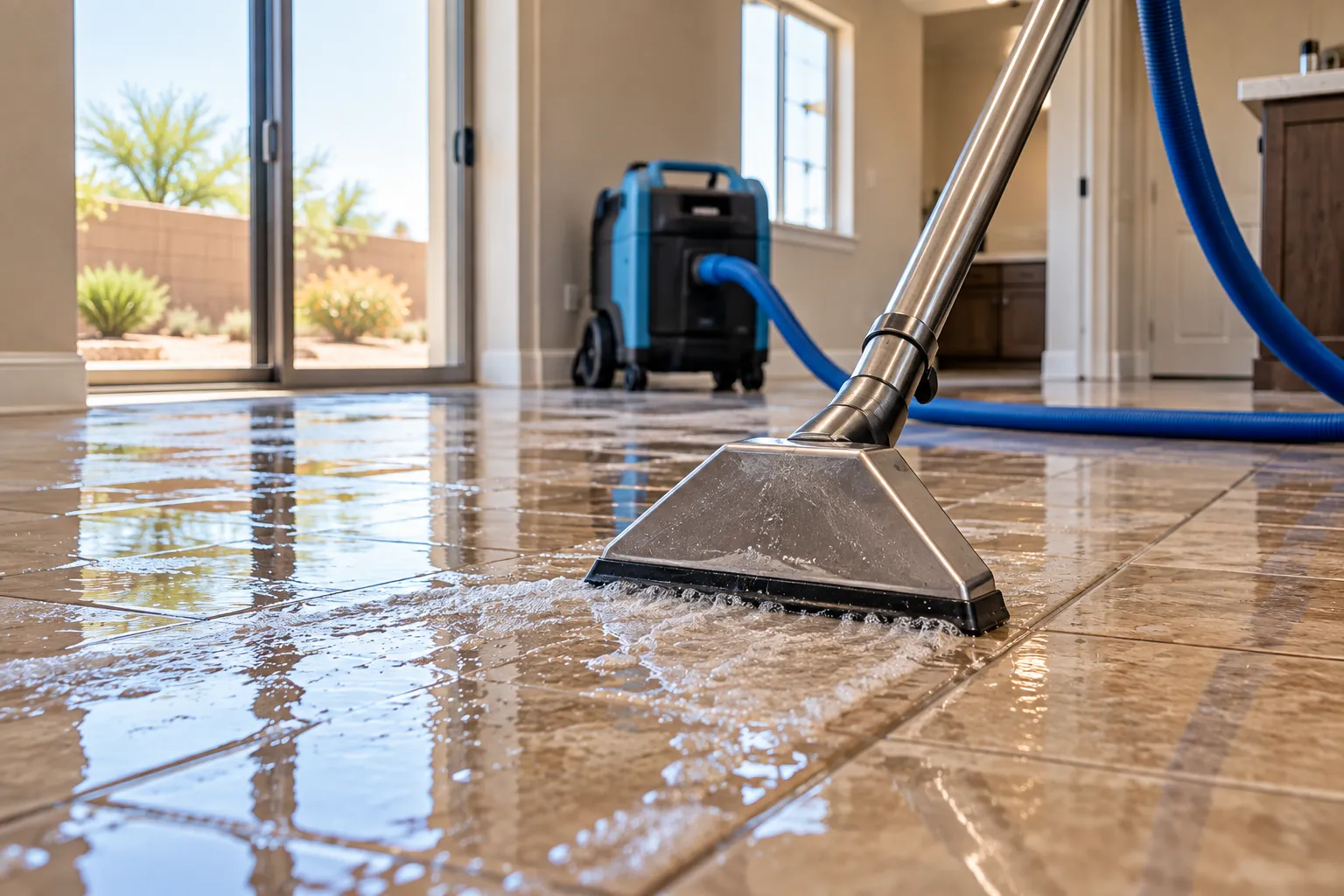
| Water extraction or removal | Taking out standing and surface water: water extraction. | Often counted as the first part of mitigation. |
| Mitigation | Actions that limit further damage: stopping the source where possible, removing water, moving contents out of harm and beginning to dry. | May include extraction and drying, and sometimes a first round of cleaning. |
| Remediation | Cleaning and removing what the water fouled, especially after dirty or outside water. | Often used for part of mitigation; some proposals use it in place of cleanup. |
| Structural drying | Drying your materials and the air against a set drying goal: structural drying. | Often counted as part of mitigation, and as part of restoration. |
| Cleanup | Cleaning surfaces the water touched and removing what you cannot keep. | May appear with mitigation, with restoration or on its own. |
| Restoration | The broader effort to return your property toward its condition before the loss. | Often includes everything above, and in some usage putting finished surfaces back. |
| Repair of finished surfaces | Replacing finished surfaces after the building is dry, such as drywall, paint, flooring and cabinets. | Often a separate trade and a separate stage. |
How the stages fit
The work in the order it usually happens
Whatever the names, the stages follow a rough order, because each one depends on the one before.
The source has to stop before water removal lasts. Standing water has to come out before your building can start to dry, and the building has to read dry before finished surfaces go back.
How long drying takes varies more than any other stage.
Stop the source
A shutoff valve, a plumber, a roofer or a repair, depending on the cause.
Remove the water
Extraction of standing and surface water.
Dry the building
Controlled airflow, dehumidification and a drying goal.
Clean and sort
Cleaning the surfaces and removing materials past saving.
Repair, if needed
A separate stage and often a separate trade.
Not sure what stage your property is in?
Wet materials keep swelling while you sort out the labels.
Scope varies
Why scope differs from one job to the next
Scope is the written list of the work on your job, and it changes with the damage: how much water there was, how far it spread, the materials and the kind of water, and who does the work.
Some businesses handle several stages together; others handle one and leave the next to another trade. The same business may also take on more of one job than another, so the line moves and you need it in writing.
Stopping the source is the clearest moving line. A broken supply line goes to a plumber, a roof leak to a roofer, and a failed appliance may go to someone else; restoration deals with the water the failure released, not the failure itself.
In practice
How the terms play out in different situations
A small, clean-water leak
The stages may run together in a visit or two: stop the leak, remove the water, dry the area and clean. On a job this size, mitigation and restoration are hard to tell apart.
A larger loss across several rooms
The early work that limits damage stands apart from the longer drying, cleaning and repair. The terms matter more here, because the stages happen days or weeks apart.
Water that came in from outside
Cleaning and removal take a bigger share, and remediation of the dirty water starts the job. Flood damage restoration runs on that pattern.
A rented or shared unit
If you rent, you may handle the early stages while an owner or manager decides on repair. Apartment and condo water damage and multi-unit property water damage both turn on who to tell first.
A separate stage
Repair of finished surfaces is its own stage
New drywall, paint, flooring, cabinets and trim come after your building is dry, and a different trade from the one that dried it often handles them. Mitigation ends with a dry, clean building. Putting finished surfaces back is separate work, so ask any business directly whether it offers it.
Ask what is included
A short, specific list of what is and is not in your scope tells you more than the label on it.
Questions
Mitigation and restoration questions
Not sure what your job needs?
Water left in your walls keeps spreading until the drying starts.
Call (480) 591-9654Is mitigation the same as water removal?
Removal is usually part of mitigation, but mitigation also takes in stopping the source, moving contents out of harm and starting to dry. Removal is one task; mitigation is a group of them.
What is the difference between water mitigation and remediation?
Mitigation is the whole early effort to stop the damage from growing. Remediation usually names the cleanup inside it: removing and cleaning what dirty water touched. Your scope should list both tasks, whatever the label.
Do I need mitigation and restoration, or one or the other?
It depends on your damage. Many jobs run both in sequence, and the labels matter less than whether your list of tasks takes in removal, drying and cleaning.
Does restoration include putting finished surfaces back?
Sometimes the word stretches that far, and often it does not. Replacing finished surfaces after drying is usually a separate stage and may be a separate trade, so find out who does it before work begins.
Is cleanup part of mitigation or restoration?
Either, depending on who describes the work. A first round of cleaning may count as mitigation and detailed cleaning after drying as restoration; what matters is that it sits in your scope.
Will one business handle everything?
Sometimes one business handles several stages, and sometimes the work splits between trades. Find out who does each stage and how they coordinate.
Where does a plumber or roofer fit?
Stopping and repairing the source, such as a broken pipe or a roof leak, usually sits apart from removing and drying the water it released. You need both, and different people may do them.
Keep reading
Related pages
Talk through what your damage needs.
Wet materials keep swelling until extraction and drying begin.
Call about the damage(480) 591-9654