What help looks like
Water damage help in Tempe, by stage and by situation
Most water damage in your home runs through the same stages: get the water out, dry the structure, clean what the water touched, and sort out what you keep and what you replace.
Getting standing water out
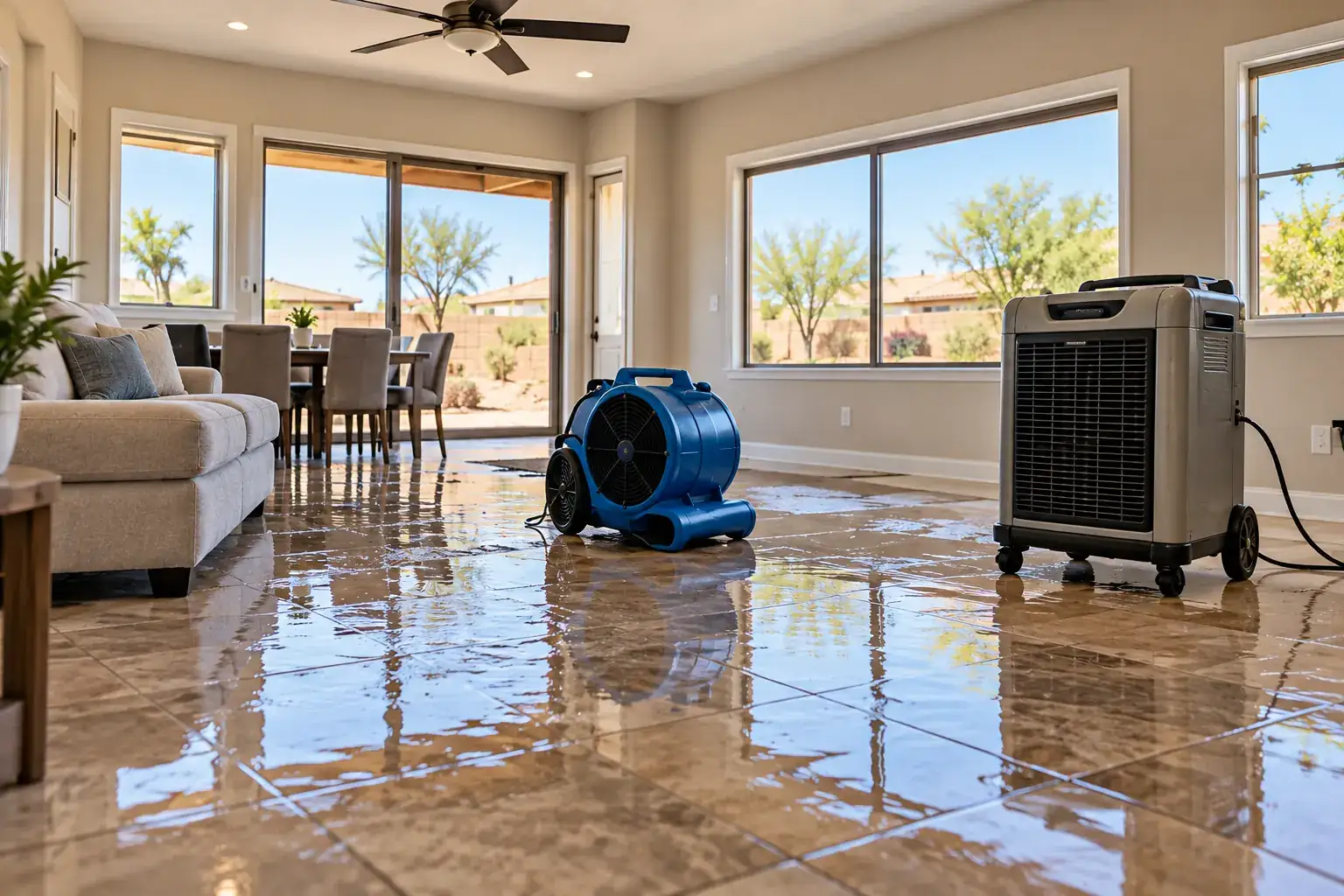
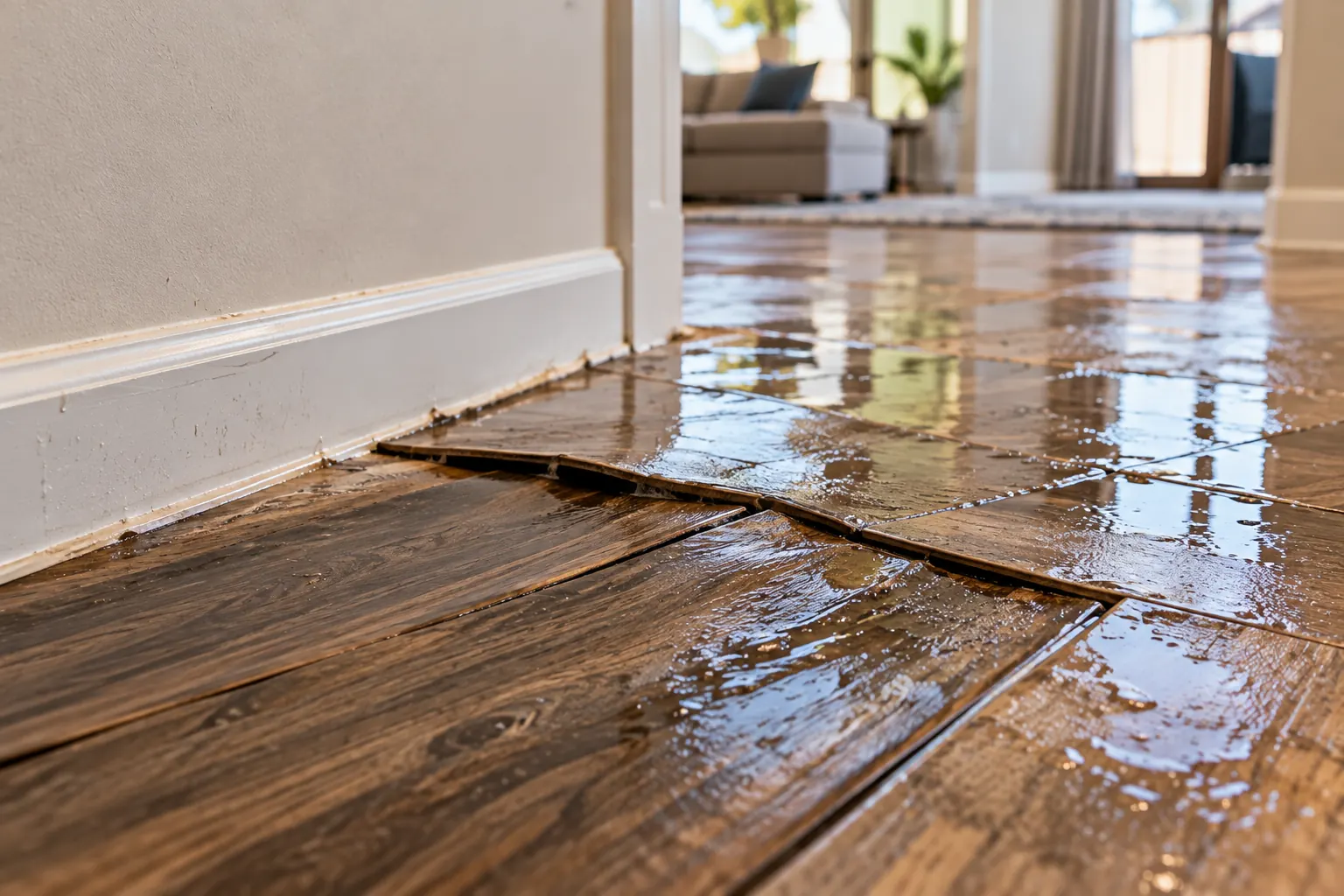
Standing water on your floor soaks deeper into the flooring and up the walls the longer it sits. Water extraction pulls it out of the carpet, pad and subfloor first, which limits how far it spreads.
Water extraction in Tempe
Drying what the water soaked into
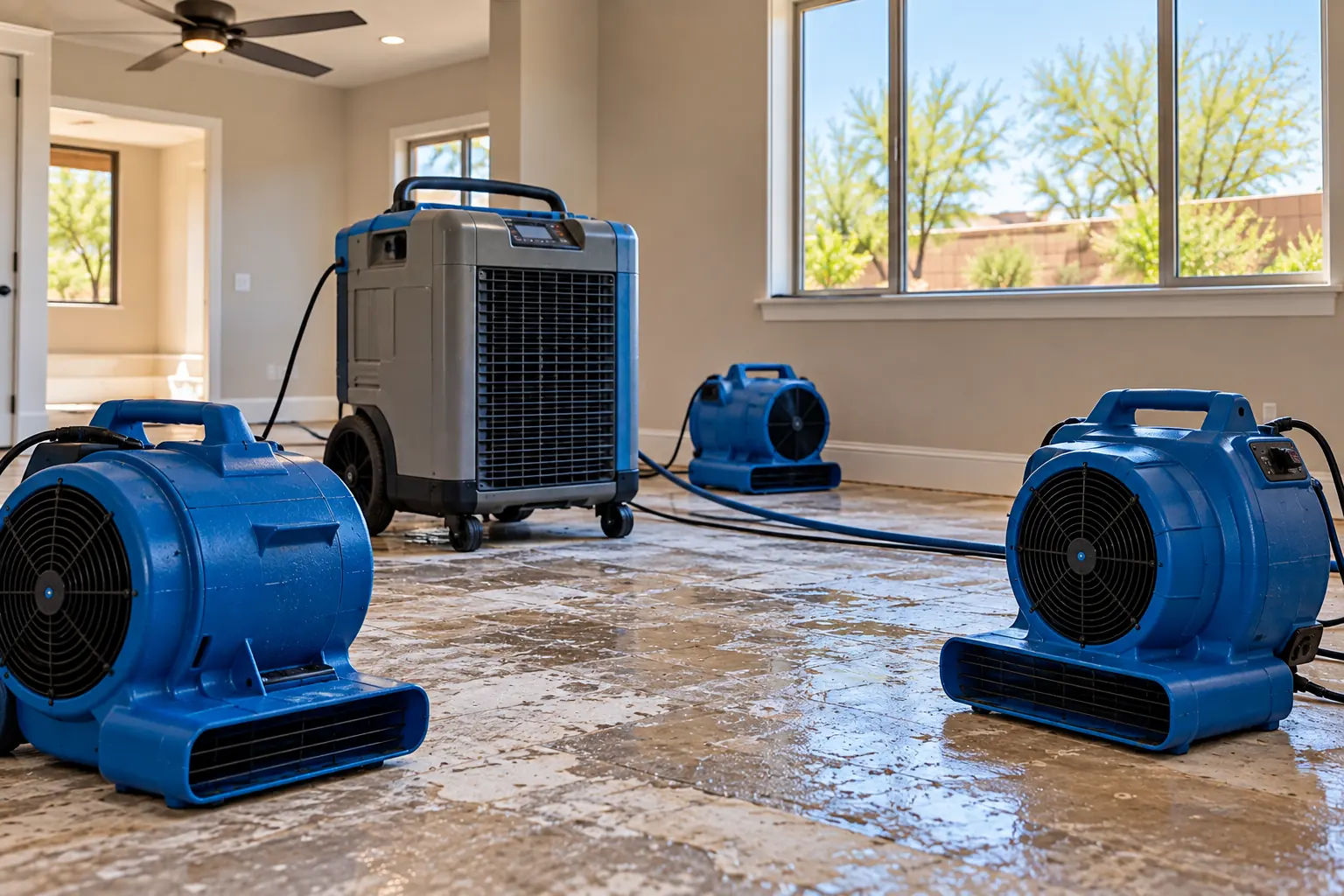
A floor that looks clear can still hold water underneath. Your walls, subfloor and framing keep moisture you cannot see, and structural drying pulls it out with high-capacity dehumidification and moisture mapping until every material reaches its drying goal.
How structural drying works
How long it takes
Your building does not dry on one schedule. The material, the amount of water, the indoor humidity and how much of the wet area drying can reach all change the timeline.
How long water damage takes to dry
Flood damage restoration after storm water and runoff
Storm water and runoff carry dirt and can carry contamination into your home, so more of your flooring and drywall tends to come out than after a pipe leak. The cleanup runs longer and the safety cautions are firmer.
Flood damage restoration
Water damage repair, mitigation and restoration: what the words mean
Mitigation, extraction, cleanup, restoration and repair overlap, and different businesses draw the lines in different places. Knowing the terms lets you ask exactly what a proposal includes.
Mitigation vs restoration
Where to start
The first hour is about safety and stopping the source: shut off the main water valve if you can reach it, and switch off power to any wet room at the breaker if you can do it from a dry spot. Stay out of any water near outlets or cords.
What to do after water damage