Apartments, condos and townhomes
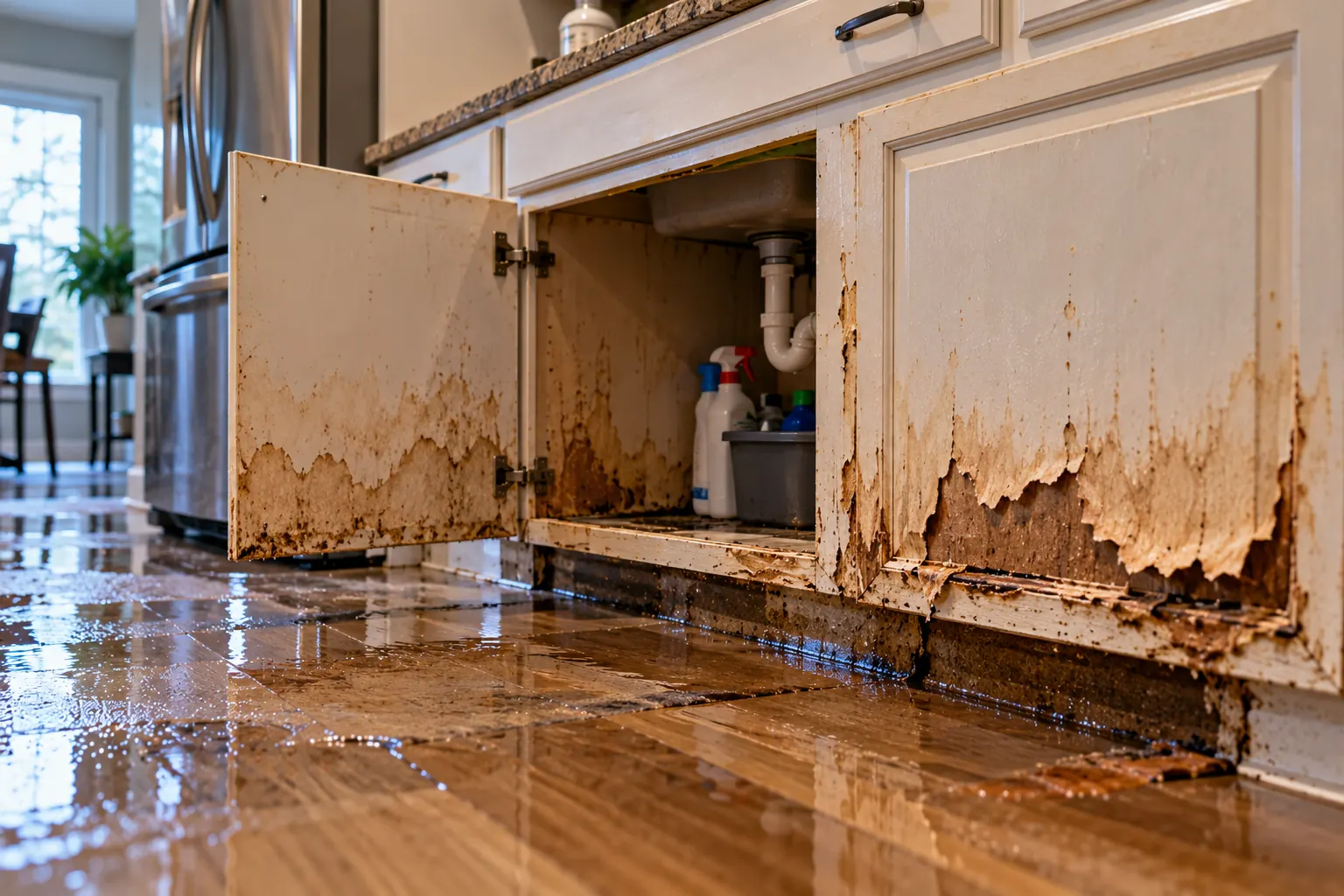
Water damage in an apartment or condo in Tempe, AZ
Water damage in your apartment or condo often starts in another unit, behind a shared wall or in a pipe stack you cannot reach. If the source is in your unit, close your main water shutoff; then tell building management and call, because water in a shared building keeps moving into the units below.
Where it starts
Where water in your unit usually comes from
In a house the source usually sits somewhere in the house. In your apartment or condo it often sits next door, upstairs or inside the building's own pipes.
The unit above
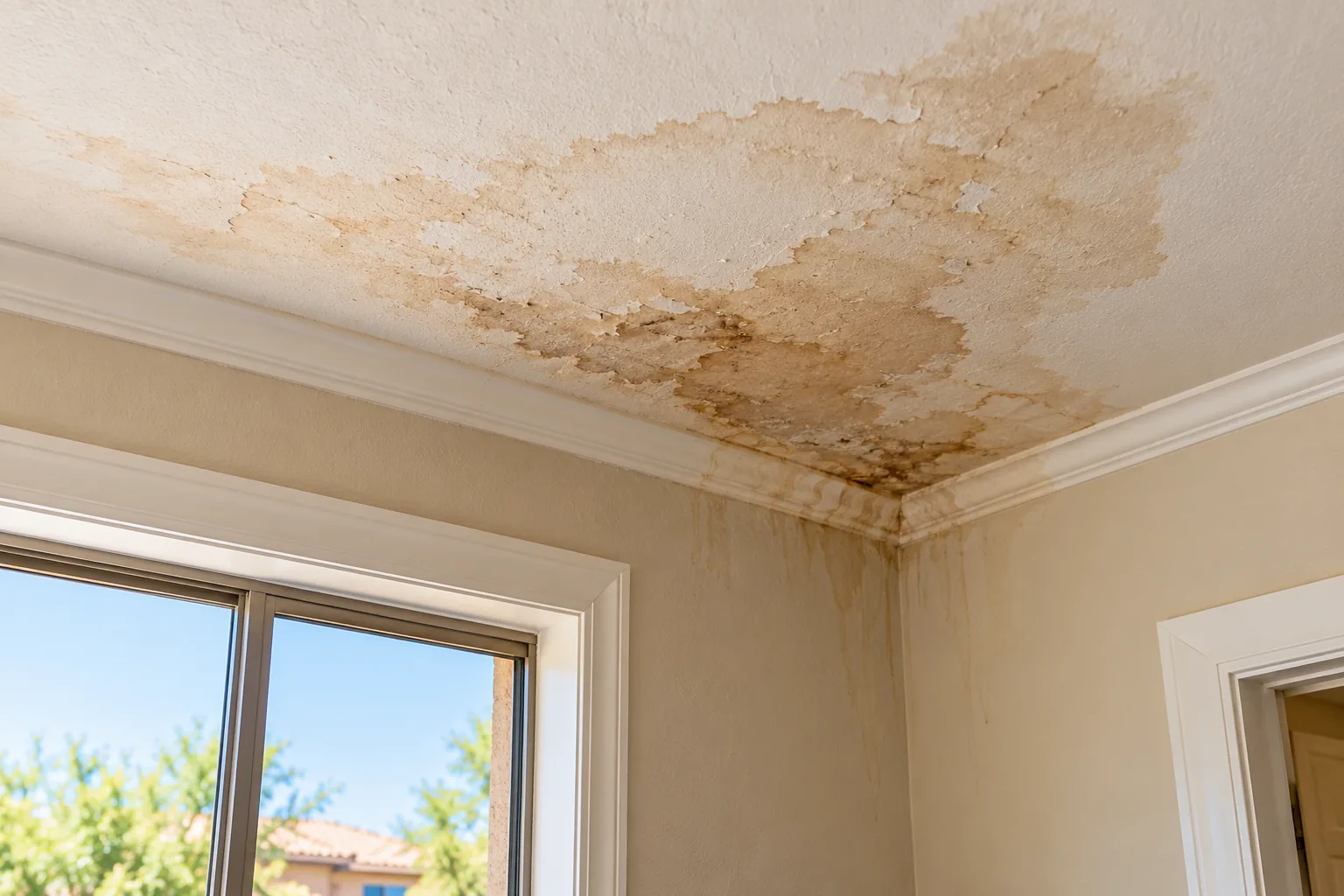
An overflowing tub or toilet, a failed supply line or a washer hose upstairs sends water through your ceiling. The first sign is often a stain, a bubble or a drip in a room with nothing wrong in its own plumbing.
A unit beside yours
Plumbing often runs inside the wall you share with your neighbor. A leak on their side wets your wall from the back, and you notice peeling paint, a soft baseboard or a musty smell before anything drips.
Shared pipes and drains
Main lines, vertical stacks and shared drains serve several units at once. A clog or break pushes water out at the lowest opening in the building, which may be your tub or floor drain, so treat water that rose through a drain as contaminated and stay out of it.
The roof and rooftop units
On a top floor, a roof leak or an overflowing rooftop air conditioner drain wets your ceilings and walls. In a monsoon storm, rain also forces its way through windows and balcony doors.
Your own unit
Your water heater, dishwasher, refrigerator line or air conditioner drain can leak through your floor into the ceiling of the resident below. In that case your neighbor needs to hear about it as quickly as building management.
Water from outside
Ground-floor units take in runoff at a patio door or entry, and that water carries dirt with it. Flood damage restoration deals with runoff that entered from outside.
First steps
What to do first when water shows up in your unit
Your first moves are about safety and about reaching the people who control the source.
Stay clear
Keep away from a ceiling that bulges or drips, since it can release its water without warning. Leave wet ceiling lights and fans off, and stay out of standing water near outlets or cords.
Stop your own source, if it is yours
If the water comes from something in your unit, close your main water shutoff when you can reach it safely. If outlets or cords sit in the water, switch off that room's breaker from a dry spot only.
Tell building management right away
Call your manager, the maintenance line or the association. They control the building's shutoffs and the access to the unit where the water started.
Call about the water in your unit
Whoever caused it, the water in your unit needs extraction and drying where it landed. The sooner professional drying starts, the less of your flooring, drywall and cabinets need replacing.
Water in your unit?
Water that reached your floor keeps moving into the walls and the unit below.
Who to tell
Reporting the leak to building management
Report the leak to management in writing as well as by phone, through email or the resident portal. A dated message shows when you first reported the problem.
Ask management three things: whether anyone has closed the building shutoff, who is checking the unit the water seems to come from, and when someone can enter your unit for the drying work.
If you rent, the owner or manager usually decides what work happens in the unit itself. If you own a condo, you may arrange the work inside your unit while the association handles the shared parts of the building. Your lease or the association's rules set that split, so ask management instead of assuming.
Who usually controls what
- Fixtures and appliance lines in your unit: you, or your owner if you rent.
- Vertical stacks, main lines and risers: the building.
- The roof and rooftop units: the building.
- Walls and ceilings you share: often both sides, as your lease or the association's rules set out.
Shared building
What a shared building changes about the work
Access
Entry to your unit, a neighbor's unit or a utility room depends on the manager or the association, and keys, codes and notice take time. The sooner you know who can open what, the sooner drying starts in every wet space.
Water that traveled
The damage you see may sit far from its source, and a leak in one unit reaches the units below and beside it. Moisture mapping traces the water through the wall or ceiling you share, on both sides.
Shared walls and ceilings
Drying a wall or ceiling you share with a neighbor often involves both sides, and an opening on one side affects the other. Your neighbors usually hear in advance when work happens next to them.
Noise and schedule
Drying runs without a break until your materials meet their goal, and it makes steady noise. In a building with close neighbors, ask what the schedule looks like and whether the work reaches common hallways.
The work
What restoration inside your unit involves
The stages match a house, scaled to a unit with floors above and below it. Standing water comes out first through water extraction, then structural drying takes the moisture out of your walls, floors and ceilings and checks each material against a drying goal.
In an upper-floor unit, the ceilings and walls below the wet area take on water too, and in a ground-floor unit the floors and the bottoms of the walls do. Saturated padding and insulation usually come out instead of drying in place.
Replacing drywall, paint and flooring afterward is a separate stage, and in a rental or an association building the lease or the rules decide who arranges it. Water mitigation vs restoration separates the drying stage from the repair stage.
If you manage or own several units
When water reaches more than one unit, your questions become the building's questions. Multi-unit property water damage takes the manager's view.
Renting or owning
Why call even if the building is not yours
The cause may sit in someone else's unit, but the water is in your home.
If you rent
Management decides what happens to the unit, and you still gain from knowing what is wet before you talk to them. Your belongings, your flooring and the rooms you live in take the damage, and an early call gets drying started on them.
If you own a condo
You may arrange the work inside your own unit while the association deals with the shared parts of the building. A call sorts out what needs drying now and what can wait for the association.
Questions
Apartment and condo questions
Water in your unit?
Shared walls and ceilings carry it to your neighbors while it sits.
Call (480) 591-9654Water is coming through my ceiling. Who should I call first?
Tell building management right away, since they control the shutoff for the unit above. Call about the water in your own unit at the same time: it needs drying where it landed, whatever its cause.
Should I wait for management before I do anything?
No. Close your own shutoff if the source is in your unit, and stay clear of a ceiling that sags or drips. Work inside your unit often needs management's agreement, so bring them in early.
The unit above is empty, or the neighbor is not answering.
Tell management, who hold keys and a way in. If the water keeps running, ask them to close the building shutoff for that stack.
Does it matter whether I rent or own?
It changes who arranges the work and who you speak with first. A renter reports to the manager or owner, and a condo owner usually deals with the association too, with the lease or the association's rules setting the details.
Do I have to move out while it dries?
Not necessarily. It turns on how much of your unit took on water, whether the water was clean and how much room the drying work needs.
Will drying my unit affect my neighbors?
It can, through shared walls, noise and any opening in a wall or ceiling you share. Management usually gives them notice before work starts beside their unit.
Keep reading
Related pages
Water in your unit? Call now.
A leak in a shared building reaches more units the longer it runs.
Call about your unit(480) 591-9654