Property managers, owners and associations
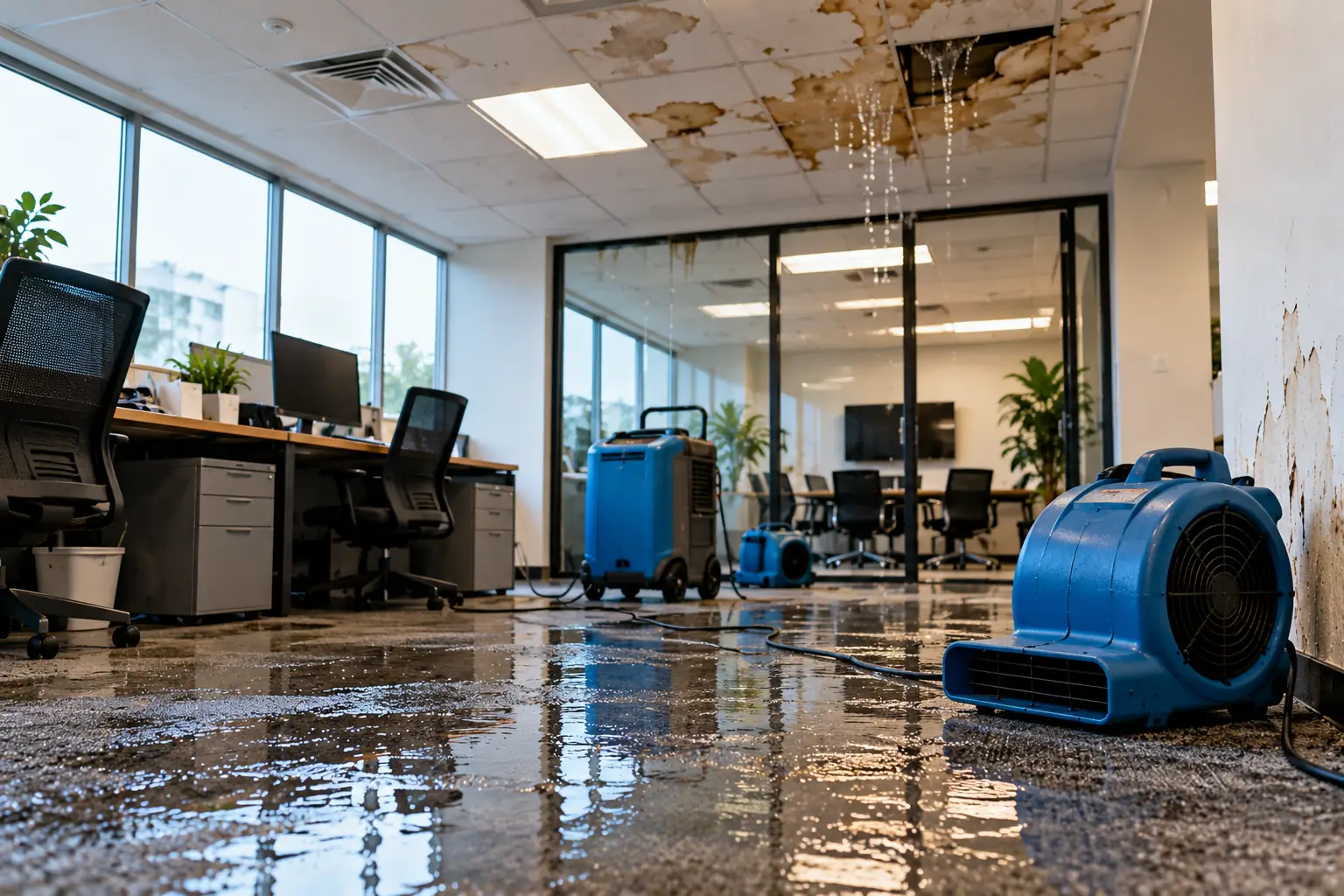
Water damage in a multi-unit property in Tempe, AZ
Water damage in a multi-unit property moves down pipe chases and through shared walls into units whose residents may not know yet. Close the riser or main water shutoff for the affected stack if you can reach it safely, then call: while the water runs, it keeps reaching the units below.
What changes at this scale
One loss, several units, many decisions
A leak inside one apartment is that resident's problem. Water moving through a stack of units, a shared wall or a corridor is your building's problem, with a wider wet area, harder access and residents who did not cause it and whom you cannot always reach.
You run the property as an on-site manager, a management company, an owner, a board or an association. Your residents face their own first steps inside each unit, set out under apartment and condo water damage.
What changes at building scale
- One source can feed a whole stack or section of units.
- Water travels down chases and through shared wall assemblies.
- A vacant unit holds water with no resident to report it.
- Access to each unit runs through your entry procedures.
- Approval for units and for common areas may sit with different people.
First, the building
Start with the building's water, not one unit
Your first decisions in a multi-unit loss concern the building as a whole.
Find the feed
A broken line can feed a whole stack or section of your units. The valve that stops it may sit at the unit, at a riser, in a mechanical room or at the main, and not everyone on your staff knows where.
Sub-meter isolation
In a sub-metered building, the sub-meter for each unit or section shows which supply still draws water. Isolating that line stops the flow without shutting off every resident in the building.
Common areas and building systems
Your wet corridors and stairs are slip hazards for every resident who passes through. Water near electrical rooms, panels, elevators and systems that serve several units needs a qualified electrician before anyone works nearby.
A roof, rooftop unit or drain
If the source is a roof section, a rooftop unit or a drain, closing a valve does nothing, and the repair belongs to a separate trade. The water already inside your units still needs extraction and drying.
Mapping the spread
Build a unit-by-unit map of the spread
Water in your multi-unit building follows paths your staff can easily miss. It runs down vertical chases beside the plumbing and drain stacks, along shared wall assemblies between units and across ceiling cavities. The unit where your residents see it is often not the unit where it started.
Professional moisture mapping traces that path unit by unit: the unit where the water started, the units directly below, the units sharing a wall or pipe run, and the corridors and rooms that serve them. You get a record for each unit of what holds water and what still needs checking.
Your quiet units matter as much as the ones that reported. Residents miss a faint stain or a damp wall, residents who are away do not know, and a vacant unit on the stack can hold water for weeks with no one there to notice.
| Where to look | Why |
|---|---|
| The unit the water started in | The source and the heaviest soaking, though not always the visible damage. |
| Units directly below | The chase and the floor carry water down to the ceilings of those units first. |
| Units beside it | Shared wall assemblies and plumbing runs carry water sideways. |
| Vacant units on the same stack | No resident is there to notice, and you need the keys or lockbox codes. |
| Corridors, stairs and lobbies | Slip hazards, and paths for water to reach the other units. |
| Mechanical and storage rooms | Building systems and stored materials sitting in the water's path. |
Water in more than one unit?
A wet stack keeps moving water down through the units below while it runs.
Residents and access
Who needs to know, and who can open the doors
Your communication with residents carries as much weight as the drying. Short, factual updates to the right people head off most of the friction.
| Who | What they need to know |
|---|---|
| Residents of a wet unit | That water has reached their unit, what to stay out of and when someone needs to enter. Tell them plainly what nobody knows yet. |
| Residents of nearby units | That water may be crossing into their unit, which signs to report, and when work will happen beside them. |
| On-site staff | Which areas stay closed, who holds the shutoff and where questions go. |
| Owner, board or management company | The extent of the loss in plain terms, who approves work and which decisions are waiting. |
| Other trades | A plumber, a roofer or an electrician may need to fix the source before the drying can finish. |
Entering units
Work inside an occupied unit needs someone to open the door, and residents expect notice. Your lease terms and notice procedures govern how that happens, so check the property's own documents. Your tenant access protocol should name who holds keys and codes for each unit and what happens when a resident cannot answer.
Scoping the work
Scoping the work across units
Your multi-unit loss is rarely one job. Each unit has its own extent of damage, its own materials and its own resident, and your common areas form a scope of their own.
Your units that share a wall, floor or ceiling usually dry together, because moisture in one shared wall assembly feeds the unit on the other side. Ask how the work in one unit fits with the units beside it, and in what order the units go.
Some of your units reach their drying goal sooner than others, and containment barriers keep damp air in the wet units out of the dry ones. Structural drying follows each unit to its own goal, so how long water damage takes to dry varies from one unit to the next.
Your approvals need their own answer. The person who authorizes work in a unit may differ from the person who authorizes work in the common areas, and a board, an owner and a management company may each hold part of it.
Property types
Rental communities, associations and mixed-use buildings
Apartment communities
Your management usually controls access, the building systems and the vendors, and residents report problems to you. Decisions run through one chain, which simplifies coordination and puts more weight on your list of units and keys.
Condominiums and townhome associations
Your owners hold their own units while the association handles the shared parts of the building. Which parts count as shared varies, so confirm early what your governing documents assign to each side.
Mixed-use buildings
If your building has shops below and residences above, you have two kinds of occupant. Commercial water damage restoration deals with the business side, from suites that stay open to stock on the floor.
Single buildings and larger communities
You can usually map a single building in one pass. A community of several buildings needs each one handled on its own, with its own shutoffs and its own list of units.
After the water
Look at why it happened, too
Restoration deals with the water a failure released, not the failure itself. In your building the source matters beyond this loss, because a failing line, an overflowing drain or a leaking roof section can reach the next unit too.
Repeated leaks in the same stack, or condensate lines that overflow in the same wing, belong with a plumber, roofer or HVAC contractor. That repair is a separate job from the water damage.
Repair comes later
Replacing drywall, paint, flooring and cabinets after the units dry is a separate stage, often with a separate trade. Water mitigation vs restoration draws the line between the two.
Questions
Questions from property managers and owners
Does every unit need checking?
Not necessarily, but the units around the source do: below, beside and above where practical. Water travels through your chases, shared walls and pipe runs, and a unit that shows nothing may still hold water.
A resident called me first. What should I do?
Treat it as a building problem, not a single unit. Find the unit it seems to start in, close the feed for that stack, and check the units around it before you assume it stops at one.
Can work start in one unit while others wait?
Often, though units that share a wall or floor usually dry together. Your access, the source and the layout of the drying decide which of your units go first.
What if a resident does not answer or refuses entry?
Your lease terms and procedures govern that. Drying can begin in the units you can enter, and a closed unit keeps its water until someone gets in.
Who should make the call, the on-site manager or the owner?
Whoever knows the building and the wet units, ideally someone with the authority to approve work. If that authority sits with someone else, bring them in early.
What about residents' belongings?
Furniture and contents in your affected units belong to the scope question. Ask early what the work includes for each unit, and how each resident hears about it.
Keep reading
Related pages
Water in several units? Call now.
While a stack runs, water keeps reaching another resident's ceiling.
Call about the property(480) 591-9654